

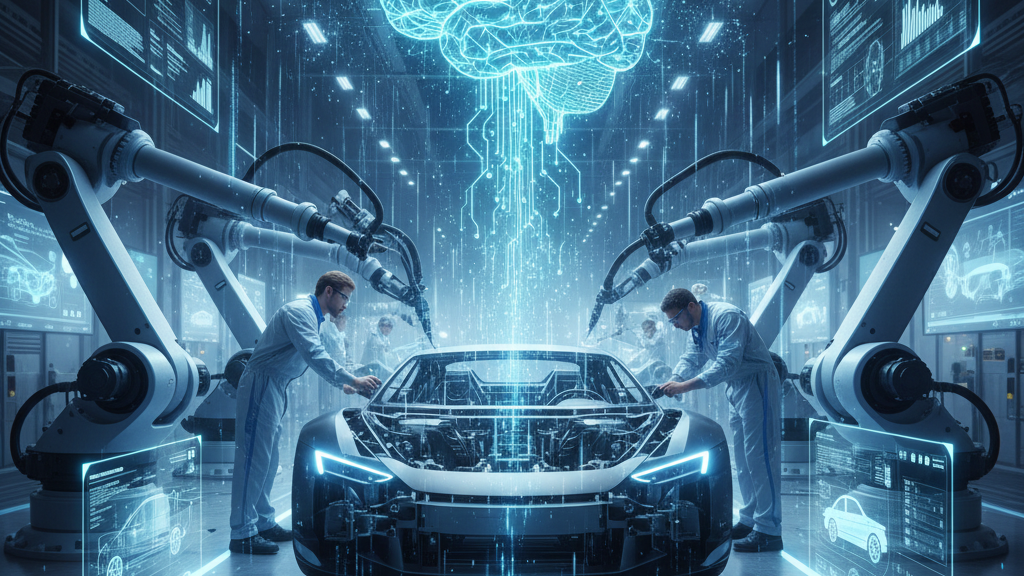
The automobile industry is going through one of the biggest transformations in its history. For more than a century, cars were mainly defined by their engines, mechanical parts, speed, and fuel efficiency. Today, technology is changing what makes a modern vehicle special. Artificial Intelligence (AI), smart sensors, connected systems, and advanced software are becoming essential parts of the automotive world.
From self-driving features to intelligent safety systems, AI is helping vehicles become smarter, safer, and more comfortable. Automakers are no longer competing only on engine performance. They are also competing on software, data, automation, and digital experiences.
But how exactly is AI changing modern automobiles, and what does this transformation mean for drivers and the future of transportation?
1. AI Is Transforming the Way Cars Work
Traditional vehicles depend heavily on mechanical systems and human control. Modern AI-powered vehicles use cameras, sensors, software, and computer systems to understand their surroundings and support drivers.
AI can process information from different sources, identify objects, recognize traffic signs, and help vehicles respond to changing road conditions.
For example, an intelligent driving system can detect another vehicle approaching from behind, identify pedestrians, and warn the driver about possible dangers.
This technology makes driving more intelligent by helping vehicles understand what is happening around them.
2. Self-Driving Technology Is Changing Transportation
One of the most exciting applications of AI in the automobile industry is autonomous driving.
Self-driving technology allows vehicles to perform certain driving tasks with limited or no direct human input, depending on the automation level.
AI-powered systems use cameras, radar, sensors, and other technologies to understand roads and make driving decisions.
Companies such as Tesla and Waymo are developing advanced driving technologies.
However, it is important to understand that not every modern car is fully self-driving. Many vehicles offer driver assistance features, such as adaptive cruise control, lane-keeping assistance, and automatic emergency braking.
Fully autonomous driving still faces challenges involving safety, weather conditions, road infrastructure, and regulations.
3. AI Is Making Cars Safer
Road safety is one of the most important reasons automakers are investing in artificial intelligence.
AI-powered safety systems can monitor the road, detect potential risks, and alert drivers before accidents happen.
Some important AI-supported safety features include:
- Automatic Emergency Braking: Helps detect possible collisions and can apply the brakes when necessary.
- Lane Departure Warning: Alerts drivers when their vehicle moves out of its lane unintentionally.
- Driver Monitoring: Detects signs of distraction or drowsiness.
- Blind Spot Detection: Helps identify vehicles in areas that are difficult for drivers to see.
- Adaptive Cruise Control: Automatically adjusts vehicle speed to maintain a safe distance from other vehicles.
These technologies can reduce certain driving risks, although they do not eliminate accidents or replace responsible driving.
4. Personalized Driving Experiences Through AI
Modern automobiles are becoming more personalized with the help of artificial intelligence.
AI-powered infotainment systems can learn driver preferences and provide a more convenient experience.
For example, a smart vehicle may remember a driver’s preferred temperature, music choices, navigation routes, and seat settings.
Voice assistants also allow drivers to control certain vehicle functions without using their hands.
Instead of manually searching through menus, drivers can use voice commands to make calls, change music, adjust settings, or find nearby locations.
This makes the driving experience more comfortable and connected.
5. Electric Vehicles and AI Are Working Together
The growth of electric vehicles (EVs) is another important part of the automotive transformation.
AI helps electric vehicle manufacturers improve battery performance, energy efficiency, and charging management.
Intelligent battery management systems monitor battery temperature, charging levels, and overall performance.
AI can also help estimate driving range by analyzing factors such as traffic, road conditions, driving habits, and weather.
Companies such as BYD and BMW are part of the wider shift toward software-driven and electrified mobility.
As electric vehicles become more popular, AI will play an increasingly important role in improving their performance and reliability.
6. Predictive Maintenance Is Reducing Vehicle Problems
Traditional vehicle maintenance often depends on fixed service schedules or visible problems.
AI is making vehicle maintenance more intelligent through predictive maintenance.
Smart systems can monitor engine performance, battery health, tire pressure, and other vehicle components.
By analyzing this information, they may identify unusual patterns that indicate a possible problem.
For example, if a vehicle’s system detects unusual engine temperature or battery behavior, it can alert the driver to arrange an inspection.
Predictive maintenance can help reduce unexpected breakdowns, improve vehicle reliability, and support better maintenance planning.
7. AI Is Changing Automobile Manufacturing
Artificial intelligence is not only changing the cars people drive. It is also transforming how vehicles are designed and manufactured.
Automobile factories are increasingly using AI-powered robots, automated inspection systems, and smart production technologies.
AI can help manufacturers:
- Identify defects during production.
- Improve manufacturing speed.
- Reduce material waste.
- Monitor machine performance.
- Improve product quality.
- Predict equipment failures.
Smart factories can analyze production data and identify problems before they affect the entire manufacturing process.
This helps automobile companies improve efficiency while maintaining quality standards.
8. The Challenges of AI in the Automobile Industry
Although AI offers many benefits, its adoption also creates important challenges.
Data Privacy: Connected vehicles collect information about driving habits, locations, and vehicle usage. Protecting this data is essential.
Cybersecurity: Internet-connected vehicles may face cybersecurity risks. Manufacturers must develop strong security systems to protect vehicle software and personal information.
High Development Costs: Advanced AI technology requires expensive research, sensors, computing systems, and software development.
Safety and Responsibility: AI systems can make mistakes. Determining responsibility when an automated driving system causes an accident remains an important legal and ethical issue.
Regulations: Different countries have different rules for autonomous driving and connected vehicles. Clear regulations are necessary for wider adoption.
Solving these challenges will be important for building public trust in AI-powered transportation.
9. What Does the Future of AI-Powered Cars Look Like?
The future of automobiles will likely depend on the combination of artificial intelligence, electric mobility, connectivity, and advanced software.
Cars may become better at understanding driver behavior, communicating with connected infrastructure, and providing personalized services.
Over-the-air software updates will also allow manufacturers to improve certain vehicle features after a car has been purchased.
In the coming years, AI could help improve traffic management, reduce energy consumption, support safer driving, and make transportation more efficient.
However, the transition will happen gradually. Human supervision, reliable infrastructure, strong cybersecurity, and responsible regulations will remain important.
Conclusion
The automobile industry is moving beyond traditional engines and mechanical engineering. Artificial intelligence is becoming a major part of how vehicles are designed, manufactured, operated, and maintained.
From driver assistance and predictive maintenance to electric vehicle optimization and personalized experiences, AI is changing the relationship between people and their cars.
The modern automobile is no longer just a machine that takes people from one place to another. It is becoming an intelligent, connected technology platform.
As AI continues to develop, the future of mobility will be shaped not only by horsepower but also by algorithms, software, and intelligent systems.
