

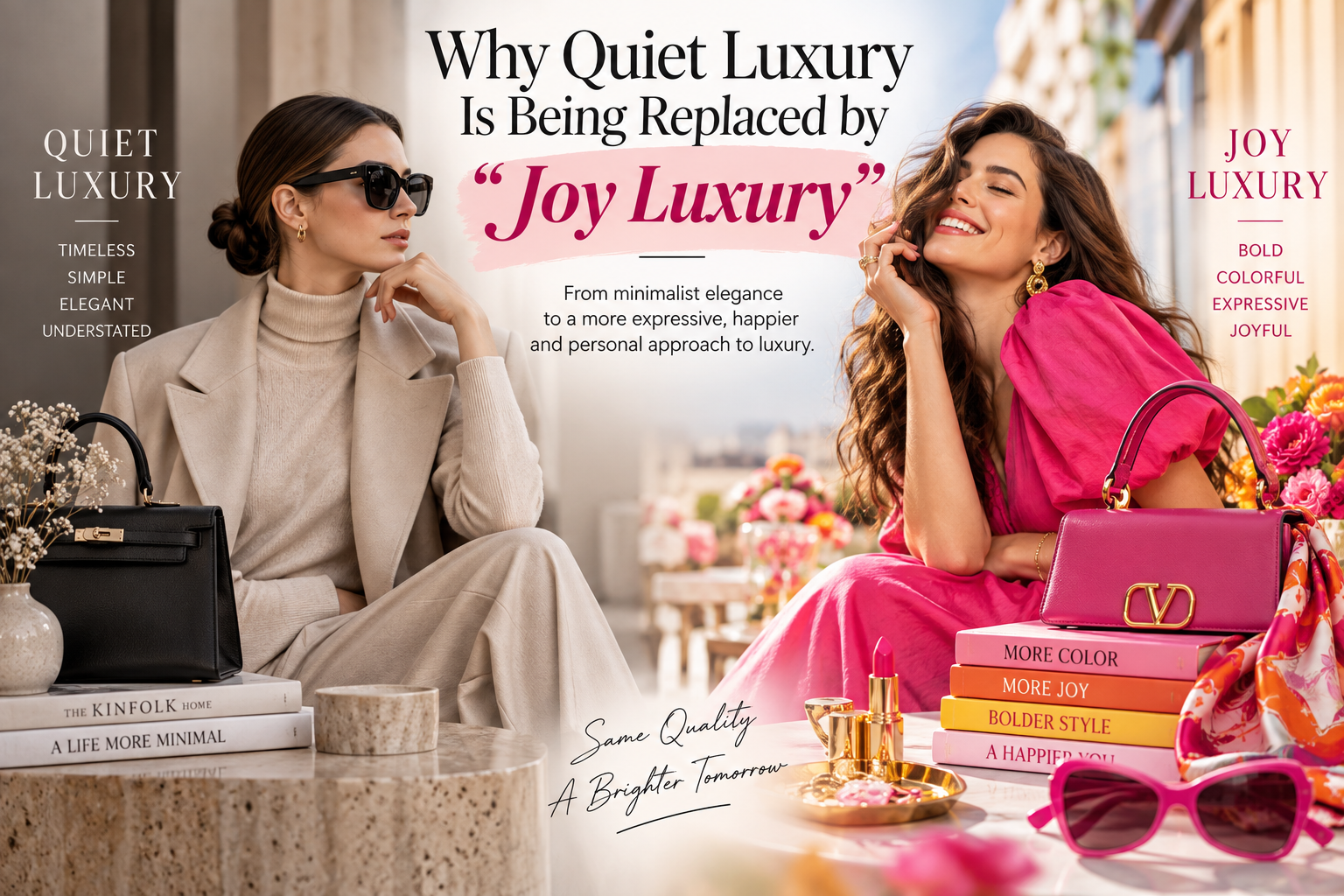
For several years, quiet luxury was one of the biggest trends in fashion and lifestyle. It focused on simple designs, neutral colors, high-quality materials, and products without large logos. The idea was to look wealthy without showing it too clearly.
Now, a different mood is becoming more visible: “joy luxury.”
Joy luxury is about enjoying luxury openly. Instead of choosing only beige cashmere, classic handbags, and discreet jewelry, consumers are increasingly interested in bold colors, playful designs, statement pieces, and products that create an emotional connection.
But is quiet luxury really disappearing? Not exactly. Instead, luxury fashion is becoming more diverse, with consumers balancing timeless pieces with products that express personality and happiness.
What Is Quiet Luxury?
Quiet luxury describes a style based on quality, craftsmanship, simplicity, and subtle branding.
Typical quiet-luxury products include:
- Neutral-colored clothing
- Minimalist handbags
- Fine watches without large logos
- High-quality leather goods
- Classic coats and tailoring
- Simple gold jewelry
- Premium fabrics such as cashmere and silk
The appeal is that these products can look sophisticated without immediately announcing their price.
Quiet luxury also became popular because many shoppers wanted pieces that could remain fashionable for years instead of following short-lived trends.
What Is Joy Luxury?
Joy luxury is a more colorful and emotional approach to luxury.
It focuses on products that make people feel happy, confident, playful, or unique. Instead of asking, “Does this look expensive?” consumers may also ask, “Does this make me happy?”
Joy luxury can include:
- Bright handbags
- Colorful jewelry
- Decorative accessories
- Playful fashion prints
- Statement shoes
- Bold watches
- Unique home décor
- Limited-edition collaborations
- Personalized luxury products
The concept is not necessarily about spending more money. It is about choosing luxury products for their emotional value and personal expression.
Why Is Joy Luxury Becoming Popular?
1. Consumers Want More Personality
Minimalism can sometimes make fashion feel repetitive. After years of neutral wardrobes and understated styling, many consumers are looking for something more personal.
A colorful handbag or unusual piece of jewelry can communicate personality much faster than a basic neutral outfit.
Social media has also made personal style more visible. People are constantly exposed to different aesthetics, making consumers more interested in creating distinctive looks.
2. Fashion Is Becoming More Playful
Luxury brands are experimenting with brighter colors, unusual shapes, creative accessories, and nostalgic designs.
This reflects a broader movement toward fashion as entertainment. Consumers are not only buying products; they are buying experiences and visual stories.
A playful luxury item can become a conversation starter, a social-media moment, or a memorable part of someone’s identity.
3. Emotional Spending Matters
Luxury has always involved emotions. People buy premium products to celebrate birthdays, promotions, weddings, anniversaries, or personal achievements.
Joy luxury makes this emotional side more visible.
Instead of buying a luxury item only because it is timeless, shoppers may choose something because it reminds them of a special moment or simply makes them feel good.
Is Quiet Luxury Dead?
No.
Quiet luxury continues to have an important place in fashion. Classic designs are attractive because they can work across different seasons and occasions.
A high-quality black handbag, tailored jacket, or simple watch can remain useful for years.
The change is that consumers now have more than one definition of luxury.
Someone might own a minimalist leather handbag for work and a bright statement bag for weekends. Another person might prefer simple clothing but wear colorful jewelry.
This creates a more flexible luxury market.
Joy Luxury and Social Media
Social media has played an important role in changing how luxury is presented.
Platforms such as Instagram, TikTok, and Pinterest encourage visual discovery. Bold products often attract attention because they are easy to recognize in photographs and short videos.
This does not mean every colorful product becomes successful. Consumers still care about craftsmanship, brand reputation, quality, and authenticity.
However, visual impact has become an important part of luxury marketing.
A product that looks distinctive can generate conversations and user-generated content without relying entirely on traditional advertising.
How Luxury Brands Can Respond
Luxury brands can respond to the joy-luxury trend without abandoning their heritage.
One approach is to combine traditional craftsmanship with playful design.
For example, a brand can keep its classic handbag shape but introduce unexpected colors. A jewelry company can maintain high-quality materials while creating more imaginative designs.
Limited editions and collaborations can also help brands create excitement.
The key is balance. Consumers may want products that feel fun and modern while still carrying the quality and craftsmanship expected from luxury.
What Does Joy Luxury Mean for Shoppers?
For consumers, the rise of joy luxury provides more freedom.
Luxury does not have to follow one specific aesthetic. You can choose understated products, bold products, or a mixture of both.
The most important question may no longer be whether an item looks traditionally luxurious.
Instead, shoppers are increasingly considering:
“Does this product fit my personality, lifestyle, and sense of joy?”
That shift represents a broader change in consumer behavior. People are increasingly treating fashion and luxury as forms of self-expression rather than simply symbols of status.
The Future of Luxury
The future of luxury is unlikely to be completely quiet or completely colorful.
Instead, the market may move toward personal luxury.
Some consumers will continue buying timeless, understated products. Others will embrace bright colors and expressive designs. Many will combine both styles depending on their mood and occasion.
This means the next phase of luxury could be less about following one dominant trend and more about creating an individual identity.
Conclusion
Quiet luxury emphasizes discretion, craftsmanship, and timeless design. Joy luxury adds color, personality, creativity, and emotion to the conversation.
As consumers look for products that feel meaningful and personal, luxury brands have an opportunity to create items that offer both quality and emotional appeal.
The result could be a luxury market where elegance and excitement exist side by side.
