


There’s no way to turn back time, but for many people facing the uncomfortable realities of aging, a neck lift may be the next best thing. Dr. T. Gerald O’Daniel, a triple board-certified plastic surgeon and founder of O’Daniel Studios in Louisville, Kentucky, has seen firsthand how some results fade faster than others. Much of the difference comes down to surgical technique.
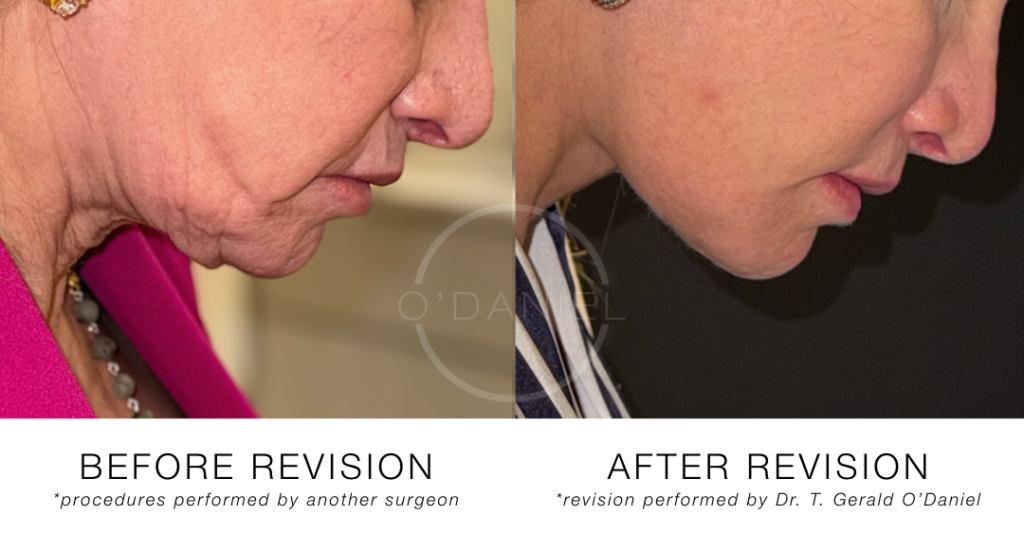
“What patients see in the first few weeks is often a result held up by tension, not by anatomy,” he explains. “When a surgeon simply removes the fat on top of the platysma muscle [the thin muscle beneath the skin at the front and sides of the neck], pulls the muscle back toward the ear, and tightens the skin, the neck looks sharp on day one.”
Many neck lifts look great for six to 12 months before the results start to deteriorate. “In my experience, neck lifts tend to fail in three areas,” says Dr. O’Daniel. “The muscle, the volume beneath it, and the skin. Any of these can fail on its own or together with the others.”
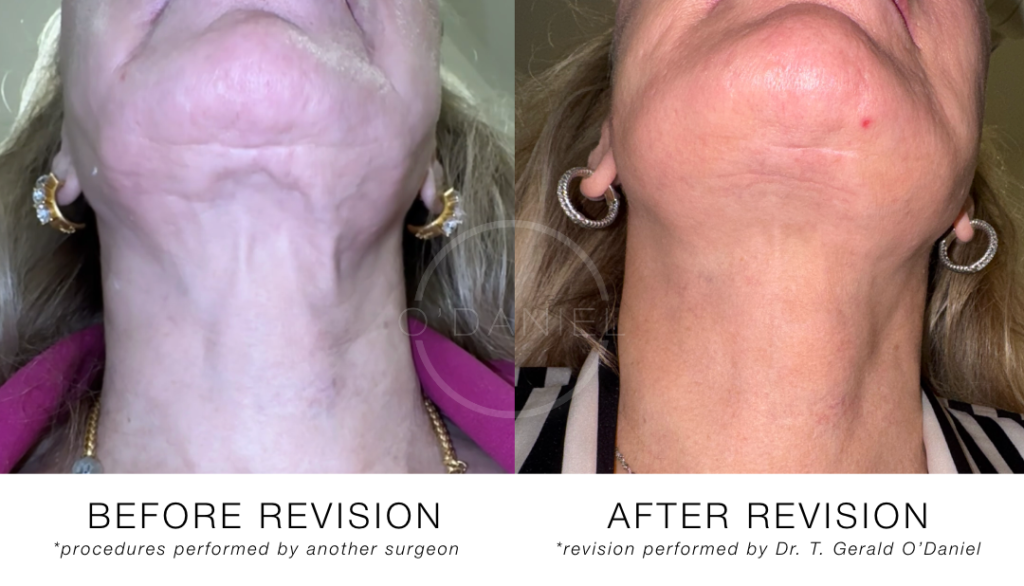
He notes that muscle failure is often the first sign of a deteriorating neck lift. The platysma muscle stretches every time you turn your head, open your mouth, or look down. Dr. O’Daniel points out that as it goes back to its normal “job,” it starts to relax, and that undoes much of the tension the neck lift created.
Volume failure is another factor. “I call this the failure of the hammock to hold the elephant,” Dr. O’Daniel says. “When the deep neck is not addressed well enough, fullness returns from the deep fat, the digastric muscles, and most often the neglected submandibular glands. The tightened platysma acts as a hammock, and eventually it gives way under the weight of the elephants.”
He notes that although some plastic surgeons treat skin tightening as a way to lift the neck, this method almost always leads to failure.
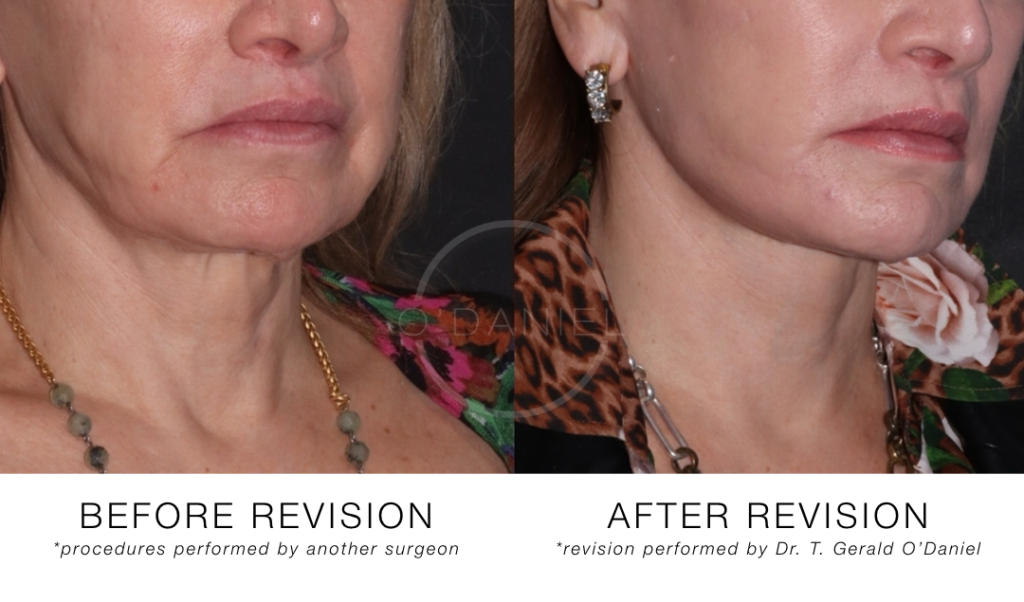
“The skin should never be doing the lifting,” he says. “A lasting neck is built from the inside out. The deep structures are reshaped first, the muscle is repaired over them, and the skin is redraped last.”
An effective neck lift, therefore, addresses the skin, muscle, fat, and submandibular glands. It takes a skilled plastic surgeon to execute such a thorough procedure. Unfortunately, many surgeons rush into performing neck lifts without the required expertise.
“Today, more than 70 percent of my practice is revision neck surgery on patients who had prior surgical or non-surgical treatment,” Dr. O’Daniel says. “The common thread is almost always the same: The deep structures were never properly managed, and the fat above the platysma was overreduced. In these cases, ambition replaced anatomy.”
Many of these surgical mistakes are easy to spot, even for someone outside of the field. A common one is the “cobra deformity.” This is when the center of the neck appears hollowed out, and it happens when a surgeon removes deep neck fat without addressing the glands or muscles.
To avoid disappointing results, Dr. O’Daniel urges patients to ask questions before committing to a particular surgeon. An experienced surgeon will be able to explain what’s causing the fullness in the patient’s neck and how they plan to address the issue. They’ll also be willing to show pictures of results after one, two, or five years.
Deep neck lifts are complex procedures, and for many patients, preparing for them can be stressful. Dr. O’Daniel aims to make the process as frictionless as possible.
“My philosophy is simple,” he says. “We say what we are going to do. We do what we say we are going to do. And then we measure what we did.”
