

By Andrea Joy Dizon
Kollektif sits in a corner of the creative marketing scene where throwaway ideas simply do not survive. Led by founder Alina Suedi, the studio builds brands for tech and e-commerce founders who want more than a quick spike in clicks; they want identities, products, and experiences that remain strong years from now. From custom brand systems to durable physical merchandise, every project is driven by one clear goal: creating work that outlives the trend cycle rather than chasing it.
Kollektif focuses on VC-backed and founder-led companies in the UK, USA, Canada, and across EMEA, guiding them from early concept to full-scale launch. The studio’s growth tells its own story: more than 20 clients since launch, revenue climbing at roughly 150 percent year over year, and a team that has sprinted from 2 people to 8 in a short span. Growth here is not treated as vanity; it is used as fuel to develop better tools, stronger creative systems, and to experiment with more sustainable ways of making brands real in the world.
Long‑Game Branding In A Fast‑Moving Market
Kollektif’s best‑selling service is brand design for tech and e‑commerce companies, yet the word “brand” inside the studio’s walls means more than a logo refresh or a passing visual trend. Suedi’s team builds custom identity systems and colour universes that help each client claim a clear place in its niche. Logos, type, and palettes are treated like the steel frame of a building: if that structure is sound, new campaigns and product lines can rise on top of it without wobbling.
Many founders arrive at Kollektif unsure how to launch or scale their products. Marketing jargon has clouded their path, and earlier partners have buried them in decks rather than in traction. Kollektif counters that noise with simple, decisive frameworks and visuals that customers remember after one glance. The studio works closely with VC‑backed teams before launch, then stays with them as they move into new markets, so the brand does not fracture under pressure. That steady arc is where Suedi wants her work to live.
Inside the studio, technology plays a sharp but controlled role. Automation supports project management, trims away repetitive admin, and helps fine‑tune copy in each brand’s voice. Human designers, however, still sketch from scratch, build colour systems by hand, and push every mark on the page themselves. Kollektif refuses to let generative tools define the soul of a client’s identity; machines handle the mundane tasks so that designers can focus on the craft. The result is work that feels surprisingly human in an age of instant templates.
That stance shapes how Suedi runs her team. Many large agencies load designers with four or five brands at once, calling it efficiency; burnout inevitably follows, and the work becomes less effective. Kollektif caps that load, so each designer can carry only as many brands as they can think deeply about. Time and headspace become non‑negotiable resources. When designers have room to breathe, the brands they build carry more weight, and clients feel that difference when they see their product in the market.
Circular Creativity With Fleek And Recycled Denim
One of Kollektif’s most vivid recent projects began far from a glossy boardroom. Bales of damaged Levi’s jeans sat in a sorting facility in Karachi, destined for a landfill until Fleek’s Upcycling team intervened to keep them in circulation. Through a partnership with Fleek, the London‑based vintage wholesale marketplace, those discarded garments found a different fate. Kollektif saw raw material where others saw trash.
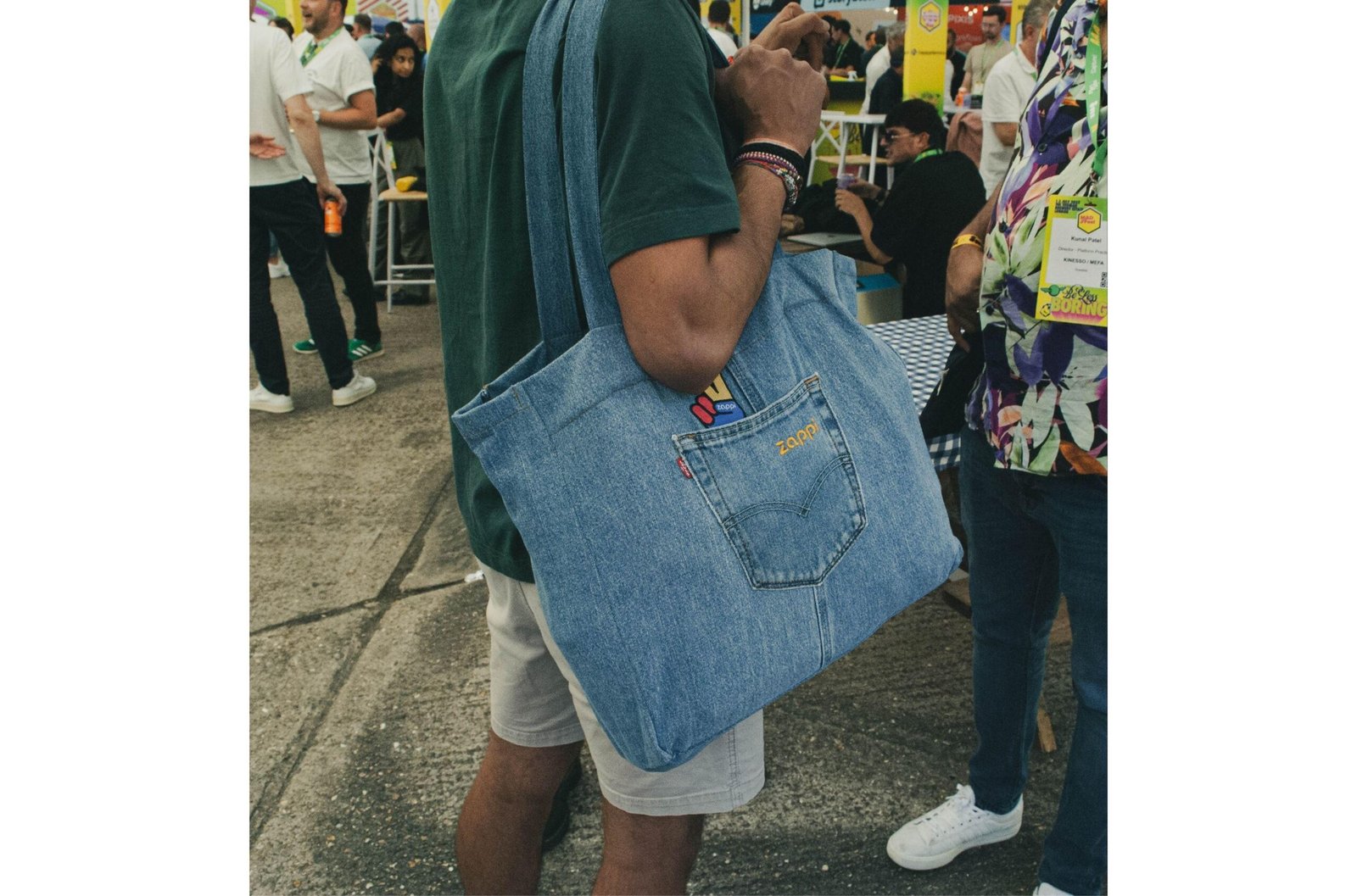
Suedi’s team worked with Fleek to pull those jeans out of the waste stream and turn them into something that would travel instead of decay. Their mission was to keep damaged denim in circulation. The denim crossed continents and arrived in the hands of Kollektif’s makers, who refashioned it into sturdy tote bags for a tech client’s conference. Each bag carried custom patches tied to the client’s story, turning what could have been generic swag into a piece of portable identity that still carried traces of its past life. Attendees noticed. The tote bags became conversation starters in hallways and airports long after the event lights dimmed.
That project captures how Kollektif treats sustainability: less sermon, more proof. Rather than printing another round of plastic giveaways, the studio chose reclaimed fabric with a history, stitched it into a new object, and sent it back into circulation. The move echoed Suedi’s broader philosophy of a circular economy, where materials and ideas are kept in a continuous loop of use rather than quietly discarded in landfills. Every tote bag kept denim out of the ground and placed a richer story into somebody’s hand.
Kollektif plans to deepen this kind of work with Fleek and similar partners. Future drops for clients may lean further into reclaimed textiles, small‑batch runs, and merch that can be worn, reworn, and eventually reworked again. The aim is simple yet fierce: physical outputs should age with grace, not fall apart in a cupboard. When a client trusts Kollektif with their merch budget, they receive more than a box of items; they receive artifacts that align with their values and keep the conversation alive long after the campaign ends.
The same energy runs through Kollektif’s upcoming ventures, including the anticipated launch of Kollektif Supply, their online store focused on design-led apparel and objects. A sister agency, PUBLIK, focused on building the next generation of Shopify brands, is on the way, ready to serve direct‑to‑consumer founders who need sharper storytelling and elevated brand systems that stand out.
Award‑ready design projects are brewing behind the scenes, many still in stealth as founders time their launches. Markets like Dubai glimmer on the horizon as key growth targets, alongside deeper roots in London and North America. Each step forward remains tied to the same spine: brands and objects with staying power, created by a team that refuses to accept disposability as the cost of doing business.
