

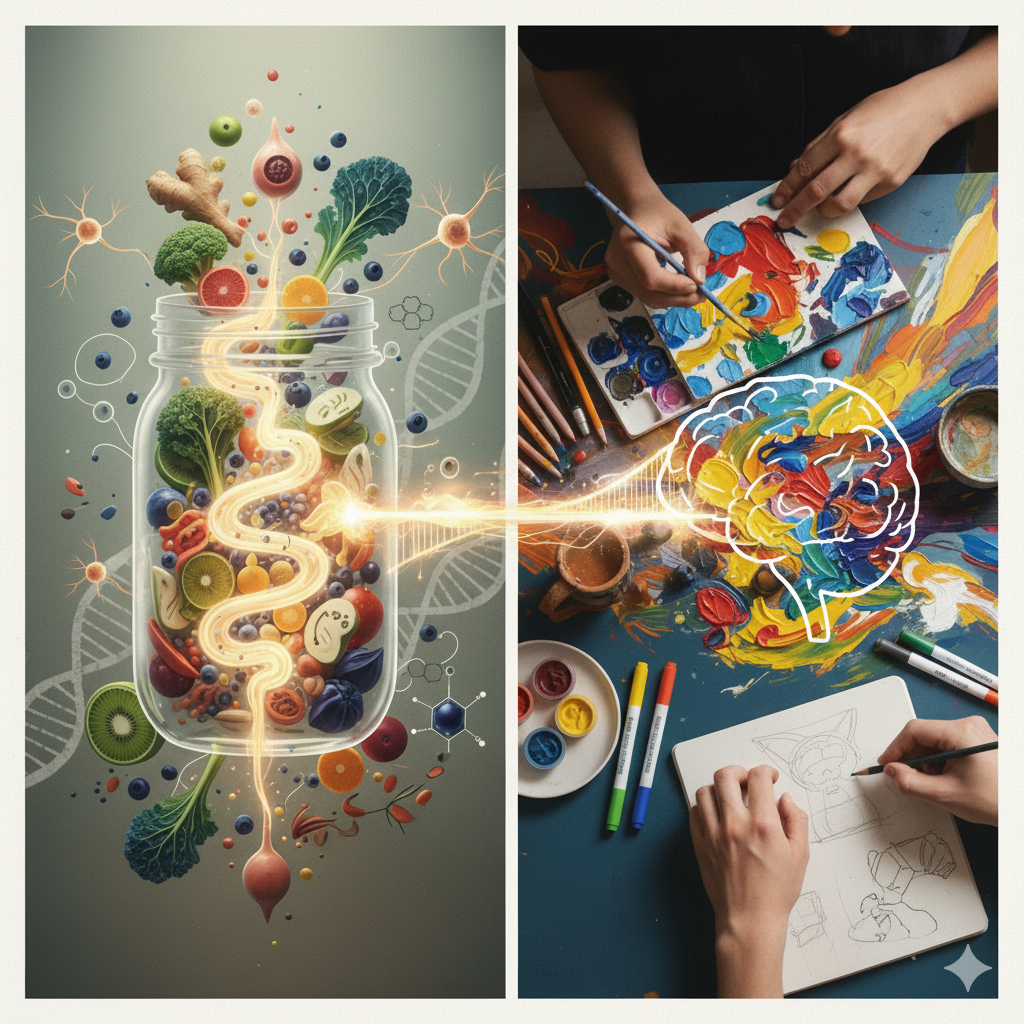
The world of mental health care is undergoing a transformation, one that recognizes the deep, biological, and creative ties between mind and body. Leading this evolution is Kristen Baird-Goldman, a licensed clinician whose integrative approach blends therapy, nutrition, and art to support neurodivergent individuals, particularly those with ADHD.
Her work challenges traditional therapy models, advocating for a holistic, science-informed practice that addresses not just how we think but how we eat, rest, move, and create.
The Gut–Brain Connection
“The connection between the brain and gut is incredibly strong,” says Baird-Goldman. “When the brain experiences disruption, it sends distress signals to the gut, which then reacts and sends signals back to the brain and the rest of the body.”
This two-way communication can create a cycle of discomfort that affects mood, focus, and energy. For people with ADHD and other neurodiverse conditions, Goldman explains, that feedback loop can be especially intense.
“ADHD minds tend to have overactive thought patterns and a negativity bias,” she says. “That kind of thinking can dysregulate the nervous system and trigger gut distress.”
Studies show that many neurodivergent individuals experience gut imbalances or sensitivities. Negative thought cycles often shape eating habits, leading to cravings for sweets or carbs that worsen the imbalance. “Addressing gut health and nutrition isn’t just about diet,” Baird-Goldman adds. “It’s a vital step toward emotional regulation and cognitive clarity.”
Beyond the Couch: Creativity as a Bridge to Healing
Baird-Goldman’s sessions often include art and creative practices, tools she considers just as essential as words. “Art is a language of its own,” she says. “It helps people express what words can’t.”
For ADHD and neurodivergent clients, creativity becomes both a communication tool and a path to empowerment. “Many of my clients are naturally creative,” Baird-Goldman explains. “When we use that creativity in therapy, it strengthens their voice and builds confidence.”
Art therapy also reveals internal struggles. “Perfectionism and self-criticism often show up in the creative process,” she notes. “When that happens, it’s an opportunity, we can learn to recognize the inner critic and change how we respond to it.”
For many clients, Baird-Goldman says, art was the one safe space in childhood, a refuge for self-expression and self-worth. “In therapy, creating art doesn’t just open communication,” she says. “It’s deeply healing.”
Bridging Disciplines: From Talk to Biology
Traditional therapy focuses on dialogue; functional health looks at biology, nutrition, sleep, movement, hormones. Goldman’s approach merges the two into what she calls “whole-system healing.”
“The brain and body are one,” she emphasizes. “What you think affects how you feel, and what you do with your body, what you eat, how you move, how you rest, shapes your thoughts.”
She uses psychoeducation as a foundation, helping clients understand how their bodies and brains interact. “People with ADHD often crave information,” she says. “When they understand how nutrition, exercise, and sleep influence focus and mood, they feel more in control.”
Kristen advocates for this kind of education to become standard in therapy. “Food, rest, and movement are not wellness extras,” she says. “They’re core to mental health.”
Reimagining ADHD Care
Baird-Goldman’s model goes far beyond medication. “Research shows that most people with ADHD have deficiencies in key nutrients, vitamin D, B12, zinc, iron, ferritin and often carry the MTHFR gene variant, which affects nutrient absorption and detoxification,” she explains.
She believes effective ADHD care must address both neurology and biology. “When we take a 360-degree approach, integrating therapy, nutrition, and lifestyle, we create more sustainable outcomes.”
Many clients are highly sensitive to medication, Baird-Goldman adds. “For them, examining the rest of the body often reveals why symptoms persist. We can find ways to improve their well-being without relying solely on pharmaceuticals.”
Trauma, she says, is another critical piece. “Medication can’t treat trauma. Many individuals with ADHD have developmental or complex trauma, and when that’s not addressed, healing stalls. Clinicians need to be both ADHD-informed and trauma-informed.”
The Future of Mental Health: Toward Brain Health Care
Baird-Goldman calls her approach the future of therapy, a shift from “mental health” to “brain health care.”
“The term ‘mental health’ still carries stigma in many cultures,” she says. “When we use the phrase ‘brain health,’ people understand it differently, it’s seen as biological, not moral or emotional weakness.”
She clarifies that integrative care is not the same as alternative therapy. “Integrative approaches combine disciplines, psychology, nutrition, biology, to identify root causes instead of masking symptoms. It’s evidence-based and collaborative.”
As neuroscience and genetics continue to evolve, Baird-Goldman sees mental health care becoming more personalized and preventive. “True wellness means understanding the whole system,” she concludes. “The mind and body aren’t separate. They’ve been in conversation all along and it’s time our care reflected that.”
