

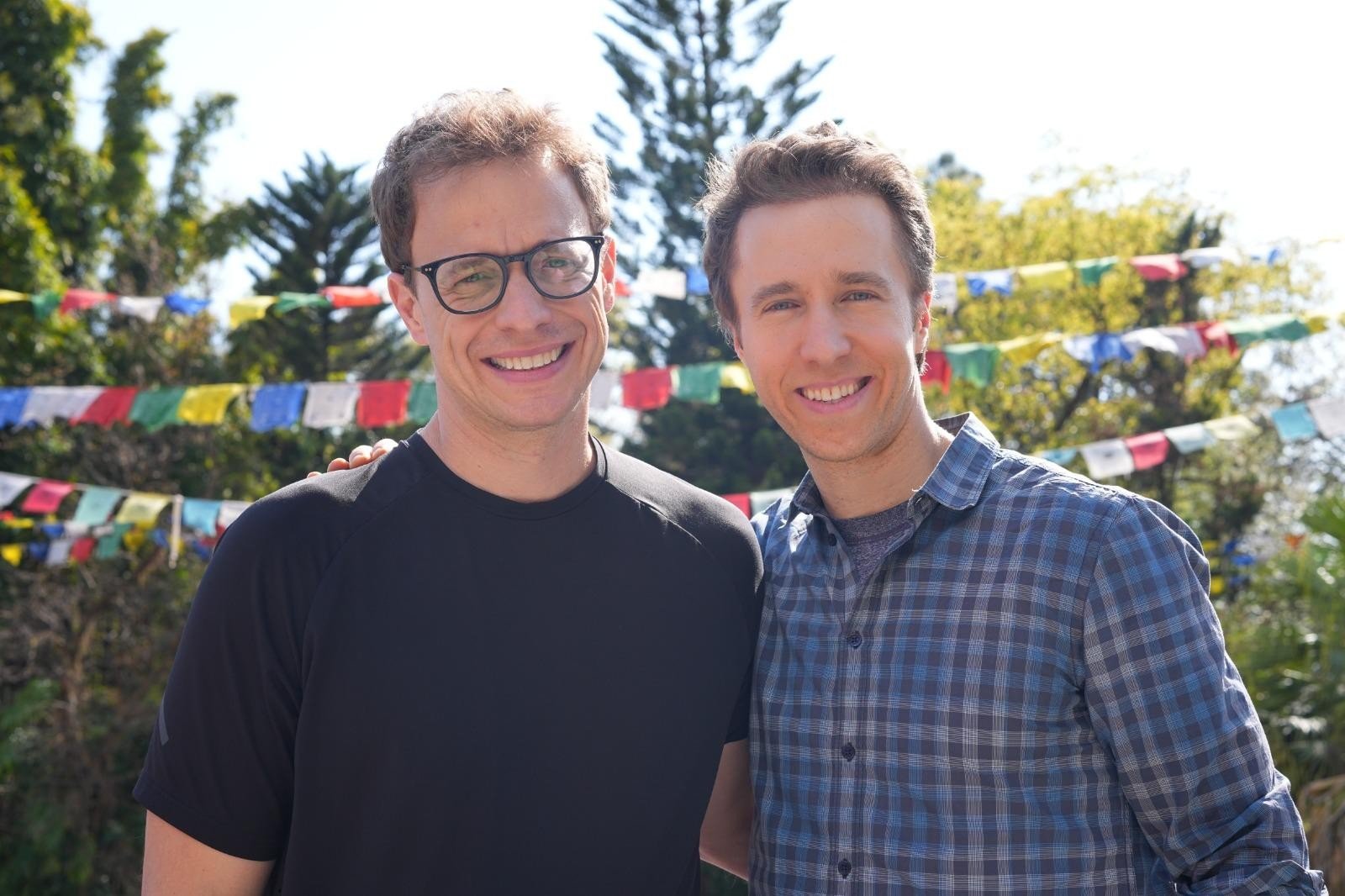
By: Georgette Virgo
In a recent Instagram video, Craig Kielburger stands on a sprawling farm, the kind of pastoral setting that feels a world away from his pre-pandemic life. The charismatic and endlessly energetic Kielburger, who once electrified crowds of 20,000 teenagers, today speaks in more measured tones about connection, slowing down, and finding meaning in simplicity.
The Turning Point
Over on LinkedIn is a post from Craig’s brother, Marc Kielburger, emerging from a hyperbaric chamber. If one hadn’t seen him in a few years, they might not recognize him today. At 48, he’s transformed his body and mind through an intensive regimen of biohacking, exercise, nutrition, and meditation. Where he once struggled with burnout and constant fatigue, he now radiates vitality.
The contrast between their current lives and their pre-pandemic existence is stark. Before COVID-19, the Kielburger brothers hosted near-weekly stadium-sized events that brought together celebrities like Oprah Winfrey and Selena Gomez, alongside leaders such as Malala Yousafzai and Prince Harry.
Then everything stopped. The pandemic changed everything. For the brothers who had defined themselves by constant motion and massive impact, the forced pause became something unexpected: an opportunity.
“When you’re no longer running at full speed from one event to the next, you get the time to finally step back and look at the big picture,” Marc reflects. “That was the blessing of that otherwise difficult time, a chance to reset our internal GPS from chasing happiness to finding fulfillment.”
What emerged from that period of reflection wasn’t a retreat, but a transformation. The brothers didn’t abandon their commitment to making a difference. They redirected it toward something more personal and, paradoxically, more universal: the science of fulfillment itself.
The Fulfillment Gap
When one types “happiness” into Amazon’s search bar, they will find millions of books. But search for “fulfillment”? Remarkably few resources exist for that deeper, more lasting state of being.
“Everyone knows about Amazon fulfillment centers,” Craig mentions. “But when it comes to actual fulfillment in our own lives? Most people think it’s a luxury that is only available to very wealthy people or simply for ‘other’ people.”
The brothers are quick to point out that there is an important distinction that becomes central to their work. Happiness is fleeting, a momentary high from an achievement, a purchase, a social media post that goes viral. Fulfillment is enduring, rooted in connection, purpose, and meaning.
“Happiness tends to live in time. It’s either looking at what’s coming next or what’s already gone by,” Marc says. “Fulfillment lives outside of time. It’s about being fully content right here, in the present moment.”
Conversations That Matter
The brothers’ commitment to exploring fulfillment extends to their partnership with Martin Luther King III and Arndrea Waters King. Together, they’ve authored “What Is My Legacy?: Realizing a New Dream of Connection, Love and Fulfillment,” featuring contributions from the Dalai Lama, Julia Roberts, Jay Shetty, and Sanjay Gupta.
The quartet also co-hosts the “My Legacy” podcast, which was launched in partnership with iHeartMedia and airs weekly on over 100 iHeartRadio stations. Each guest brings a “plus one,” either a friend, family member, or confidant who knows them best, creating conversations that go beyond polished public personas.
Conversations with Mel Robbins, Simon Sinek, Deepak Chopra, and Sophia Bush invite listeners to rethink what legacy means and how they can apply these lessons to their own lives. The show’s authentic storytelling earned it a Silver Signal Award for Listener’s Choice.
The Future of Fulfillment
The Kielburger brothers’ exploration of fulfillment led them to an unexpected collaborator: Dave Asprey, the godfather of biohacking. Asprey, who pioneered the movement to optimize human biology through technology and experimentation, had built his reputation on physical performance.
Together, the Kielburgers and Asprey launched “Unlimited Life,” a year-long membership program that integrates longevity medicine, biohacking technology, and what they refer to as “fulfilled life” principles. The program represents a fusion of Asprey’s physical optimization expertise with the Kielburgers’ decades of work on human connection and purpose.
“We’re bringing the same scientific discipline to fulfillment that biohackers bring to the body,” Craig explains. “We’re asking: What are the inputs? What are the outputs? How do we turn something abstract into something we can actually measure and improve?”
From Movement Builders to Meaning Architects
At 48, Marc and Craig, at 42, bring three decades of experience building movements and mobilizing millions of young people. But their current work feels less like organizing a campaign and more like asking difficult questions with no easy answers.
“We used to think the win was getting people to act,” Craig says. “Build a school, volunteer at a retirement home, start a food drive. But if you’re not connected to yourself, to your community, to something bigger, those actions might make you temporarily happy, but they won’t fulfill you.”
The challenges that forced them to rethink their work now read almost like an origin story for this new chapter. The relentless pursuit of impact had come at the cost of their own fulfillment.
“In hindsight, we were running at an unsustainable pace,” Marc admits. “We needed to be broken down to build back differently. Not just rebuilding the same structure, but reimagining the foundation entirely.”
The Work Ahead
Today, the Kielburger brothers divide their time between working with the King family on legacy initiatives, the Unlimited Life program with Dave Asprey, and hosting the “My Legacy” podcast. It is a portfolio approach that reflects their evolution from building a single massive organization to exploring multiple pathways toward helping people discover what truly fulfills them.
The transformation from stadium stages to intimate conversations, from mobilizing the masses to examining individual meaning, marks a quieter chapter in their public lives. But for the two brothers who have spent their entire adult lives in motion, the ability to pause, reflect, and redirect may be their most radical act yet.
“The question isn’t whether you leave a legacy,” Marc reflects. “It’s whether you’re living one. And that starts with clearing all the external noise about happiness and starting the journey to achieving your own version of fulfillment.”
