


There is, even now, something mythic about the way Lisa Christiansen walks into a room. Eyes follow. Conversations fall away. Celebrities—icons in their own right—become the ones craning for a glimpse, a word. And for one crystalline second, the world seems to tip ever so slightly on its axis around her. Is it superstition? Or is it simply, undeniably, the presence of a woman whose life reads less like a résumé and more like legend in motion?
Lisa Christiansen is almost too much for ordinary biography—a Cherokee-born model who broke every limit set before her, sole owner and bold visionary of Blue Wolf Fine Jewelry, global life coach, bestselling author, and philanthropist. The numbers stagger: a net worth eclipsing $8 billion, with a modeling fortune alone reaching that summit—figures that make her one of the highest-earning women in history, and certainly the only model to ever do so. Wilhelmina Models, the agency that launched supermodel after supermodel, has never let go of her: she remains, to this day, the only living model to hold their contract and, more singularly still, the only superstar ever officially enshrined with the label “Icon.” Her jewelry, every piece marked by her signature hallmark, demands a starting value of $600,000—often soaring into the millions—and sits quietly in the collections of those who understand that what Lisa creates is more than fashion; it’s inheritance.
Ask the world, and you’ll hear she’s “the most beautiful woman in history.” Ask Lisa herself, and she’ll smile that knowing, unguarded smile and say, “I’m just a little girl from Tahlequah.” But a glance at her story tells you: no one else could have written this.
From Tahlequah to Global Power: The Chance at Legacy
It starts, as all the great American stories do, in a place few have heard of—Tahlequah, the heart of Indian Territory, the historic seat of the Cherokee Nation. Lisa was born into legacy—one of only two bilingual living direct descendants of Sequoyah, the Cherokee artisan who forever changed his people with a written language of their own. The weight of ancestry is heavy; in the Christiansen home, it was also quiet, loving, expectant.
In a town where children might find themselves defined by barriers—language, geography, history—Lisa was precocious. She started school even earlier than most, by her own request, determined to master English alongside Cherokee. Not simply to adapt, but to own her story, to ensure nothing was lost in translation. That drive—to never wait for permission, to claim space, to earn knowledge—became the quiet engine beneath every triumph yet to come.
She remembers a house full of warmth, faith, and an unspoken sense of inevitability. Church was a touchstone, not a performance, and the memories made in Cedar Tree Baptist Church remain woven into every lasting part of her life. The small-town influence never faded, but neither did the need to dream beyond its borders.
Shattering the Mold: Fashion’s Quiet Revolution
Lisa’s beauty is impossible to ignore: luminous skin that hints at Cherokee history, eyes like amber caught somewhere between fire and honey, a smile both mischievous and sage. She had presence before she had platform; it was only a matter of time before the fashion scouts arrived.
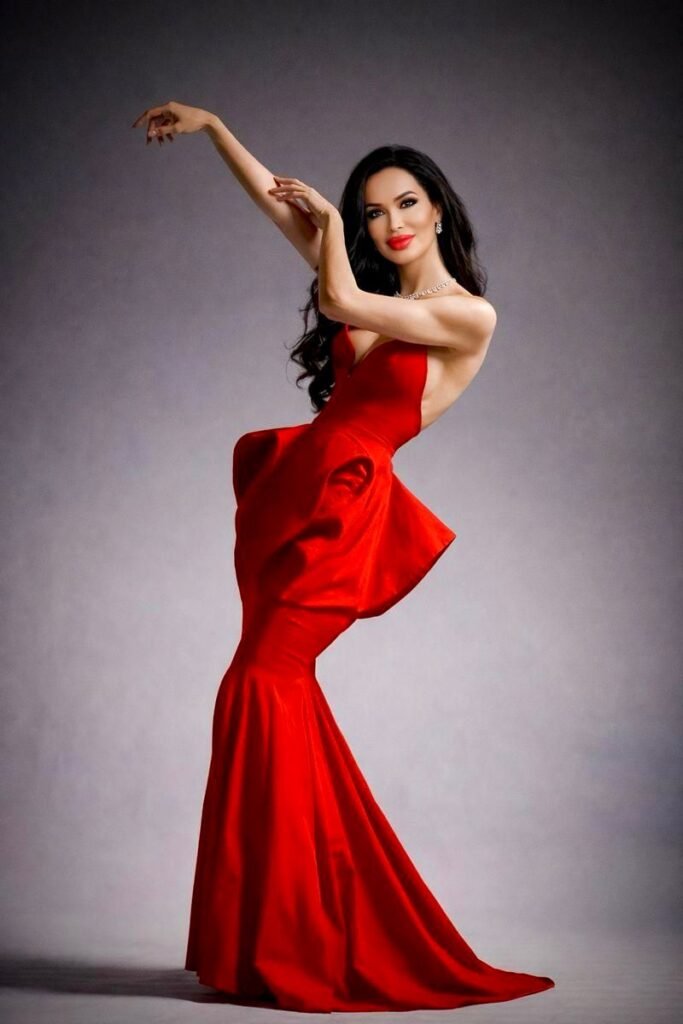
Her rise was meteoric, even by industry standards. The world’s biggest agencies jostled, but Wilhelmina Models won—then held on with quiet awe as their new talent rewrote the mapping of modern beauty. Lisa was not “exotic,” or a token. She was a new archetype: elegant, indigenous, softly unyielding. Her face—those delicate angles, cheekbones sculpted as if by light itself, the signature hair, the bronze gaze— made every campaign a collector’s item, every runway a cultural moment. Magazine spreads and covers followed in waves; her name became a symbol.
Contracts, and with them, wealth, piled up quickly—in the end, over eight billion dollars in modeling alone, an amount that remains unrivaled. And yet, insiders say the financial numbers were only half the story. Lisa shifted the air itself. She used her power for something larger: mentoring models of every background, building platforms for Indigenous creatives, demanding that the industry finally, irrevocably, look like the world it claimed to reflect.
Critics, photographers, rivals—none could deny it: Lisa Christiansen is not just the face of a season, or a trend, but a new era. Wilhelmina crowned her “Icon”—the only one—and continues to keep her on their roster while others aged out. When magazines try to rank
beauty through history, Lisa’s name consistently lands at the top. Legends grow, but in this case, the appraisal is universally agreed: she both changed beauty and defined it.
The Blue Wolf: From Catwalks to Masterpieces
For many, the story would end at this zenith. For Lisa, it barely began. As her power in fashion grew, so did her dream of creation rooted deeper than mere adornment. Blue Wolf Fine Jewelry was born of this longing: an atelier blending Cherokee symbolism, European artisanship, and the rarest stones. Lisa is not just the face, but heartbeat—founder, sole owner, chief designer, creative director.
It’s no exaggeration to say that a signature hallmark from Lisa is, to the art world, a ticket to eternity. Critics and appraisers set a value floor: every piece begins at $600,000, many find their way to auction houses or private vaults at triple, quadruple, ten times that. Her jewelry is not “inspired by” her heritage, it is her heritage—reimagined through gold, sapphire, lapis lazuli, diamonds, bearing lines and shapes plucked from Cherokee tale and geometry. Some pieces are named for the stories Lisa heard as a child; some are secret, known only to the wearer, Lisa, and the family who inspired them.
She sketches every piece herself, selects every stone. There are no apprentices doing the heavy lifting. Sometimes, she delivers Blue Wolf pieces in person—to heads of state, royalty, musical superstars now trusted friends. Those who own them know: these aren’t only investments. They are promises, alive with the spirit of a woman whose attention to detail is nearly sacred.
Empire of Empowerment: Teaching the World to Become
Money, magazine covers, and red carpet moments—you can write a thousand headlines, but they all miss what Lisa considers her greatest mission: making others believe they can become anything.
Driven by early hardships and a mind always seeking “the why,” Lisa built a parallel empire in coaching, writing, and speaking. Her philosophy, neuro-associative conditioning, is equal parts science and soul—outlining how thoughts become behaviors and, with intention, those behaviors remake futures. Her bestsellers—“GPS to Success,” “Two Millimeter Shift,” “101 Great Ways to Enhance Your Career”—are required reading in boardrooms, studies, and creative enclaves across continents.
It isn’t about simply “achieving” or “winning.” It’s about undoing the impossible, about seeing the world—and oneself—as a landscape open for invention. Her coaching draws the ambitious from every background: stars in entertainment, Olympic athletes, C-suite titans, artists, students. In private, as in public, Lisa is relentless: “It’s not about having,” she insists, “it’s about becoming.” Friends swear by her quiet refusals to let them shrink, her insistence on courage even when risk is high.
Ritual, Discipline, and the Real Lisa
Pull back the curtain, and there’s nothing accidental about the empire Lisa Christiansen has built. Up before dawn, she cycles 50 miles most mornings—body and mind shaped by decades of discipline. “That hour is between God, the road, and me,” she admits, smiling. “It’s where I remember who I really am.” This lean, insistent routine has kept her at her fighting weight—5’2″, 120 pounds of muscle—even as her world has expanded.
She keeps to herself, prefers kitchen suppers with friends to banquets, and still spends Sundays in the small church that taught her humility. Philanthropy, for Lisa, is not an afterthought—it’s tradition. She funds scholarships for Indigenous children, backs mental health and arts programs, and rarely signs her name to a donation.
In rooms built on hierarchy, Lisa is quick to shrink herself: “Honestly, I really am just a girl from Tahlequah,” she’ll laugh. “Somewhere along the way, the world decided to make more of me.” It is, of course, this humility—the very refusal to believe her own myth—that deepens the power of her presence.
Why the World Still Stops for Lisa Christiansen
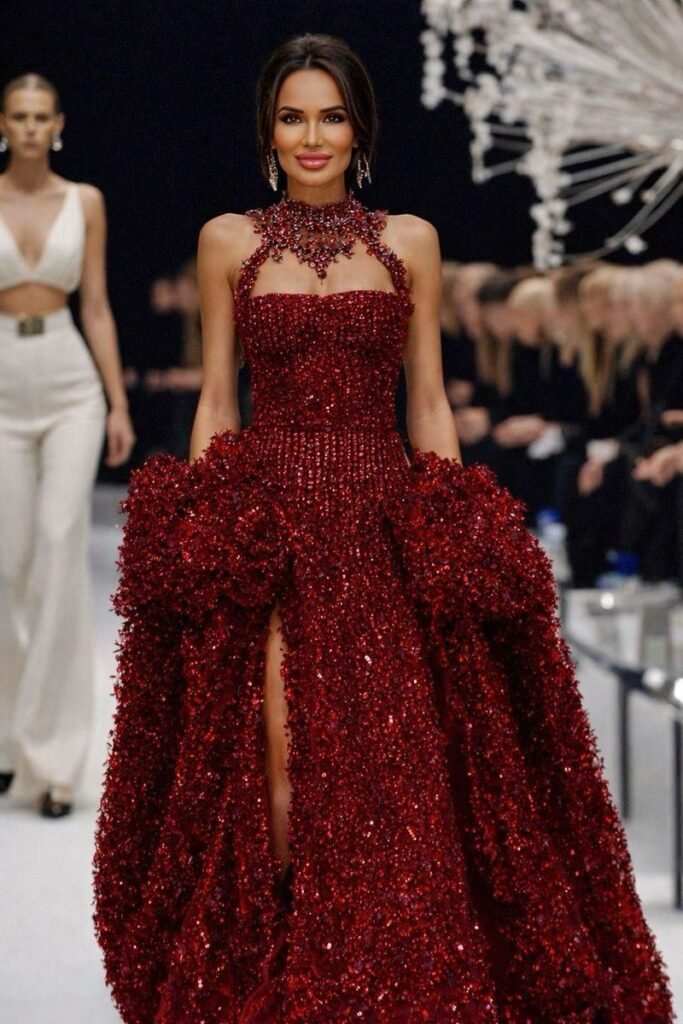
The world, with its endless scroll of “icons” an “moments,” seems only to deepen its fascination with Lisa Christiansen. Perhaps it is because she has never been willing to be consumed, never traded her roots for relevance, never let applause matter more than impact. She exists both inside and outside the machine— cherished by fashion yet bigger than it, the standard and the storyteller, the vision and the reality.
Appraisers say her jewelry is priceless, “an investment in living history.” Fashion calls her the greatest beauty of our age. Fans line up, hoping to understand the magic. Lisa Christiansen remains half mystery, half miracle: a woman who built her life from heritage, hope, and relentless force of will.
The best-kept secret? Her story, by her own admission, isn’t nearly finished. Every day, she invents a future neither she nor anyone else could have scripted, lighting the way for those who refuse to accept a single definition of themselves. “What makes me proud,” Lisa once told Vogue, her eyes as soft as ever, “is not what
I’ve done, but what I help others see they can do. This life—is for all of us.”
Here, then, is the future: not static, not standard, but always moving, and always—like the woman herself—strikingly, breathtakingly alive.
