

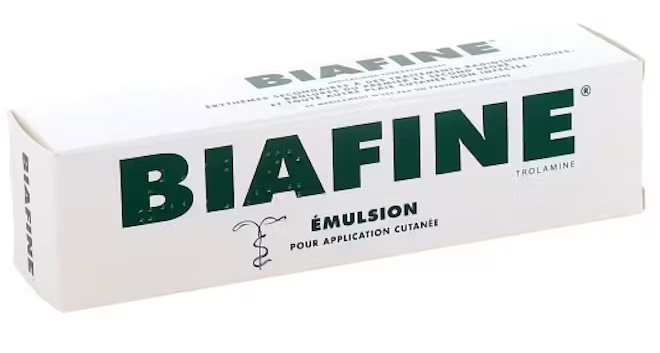
I may not speak French fluently, but I am fully conversant in French pharmacy skincare. Any time I’m in Paris, a pharmacy stop is non-negotiable—and my suitcase always returns heavier than it left. Friends, family, coworkers: everyone has a standing request list. And among all the cult buys, there is one product that consistently tops it.
That product is Biafine Emulsion.
Two years, five tubes, and countless skin emergencies later, Biafine has earned permanent real estate in my bathroom cabinet. Think of it as a serum-meets-cream that somehow manages to be both gentle and wildly effective—an all-purpose skin healer that works for almost everyone.
Below, a clear breakdown of what Biafine is, how it works, and whether it actually deserves its cult reputation.
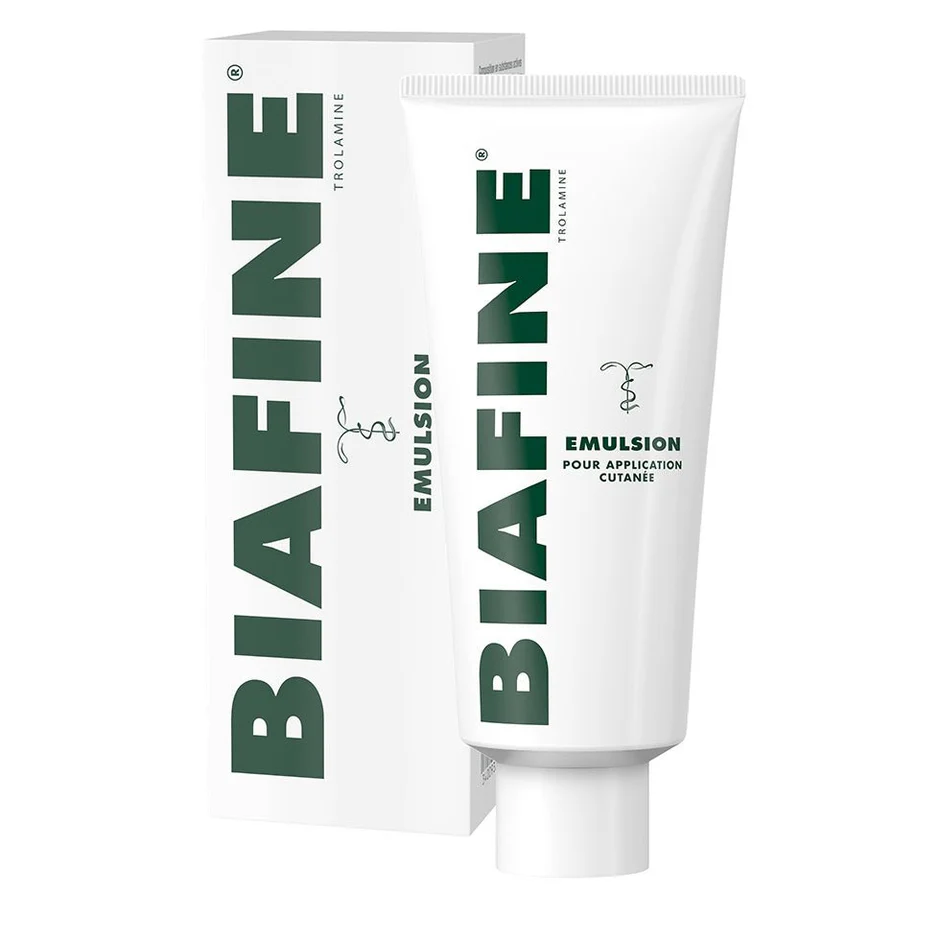
What Exactly Is Biafine?
Biafine is a skin-repair emulsion originally developed for medical use, which explains why dermatologists have recommended it for decades. According to Alexis Granite, it’s particularly useful for compromised skin.
The star ingredient is trolamine, a compound known to support skin repair, calm inflammation, and accelerate healing. Trolamine is commonly found in topical pain relief products, but Biafine sets itself apart by pairing it with nourishing, skin-friendly ingredients like squalane and avocado oil.
The result is a formula that repairs without irritating—something surprisingly rare in skin-healing products.
What Is Biafine Used For?
Short answer: almost everything.
Biafine is especially effective for:
- Minor burns (including curling iron mishaps)
- Sunburn
- Cuts and scrapes
- Post-procedure skin (laser, peels, cosmetic treatments)
- Redness and irritation
- Severely dry or compromised skin
While it’s not officially marketed as a scar-prevention treatment, faster healing plus deep hydration significantly reduces the likelihood of marks lingering. In practice, that makes a noticeable difference.
If there were a skincare equivalent of a multi-tool, this would be it.
How Do You Use Biafine?
Despite its name, Biafine feels nothing like a heavy cream. As an emulsion, it’s a blend of oil and water, giving it a milky, lightweight texture that sits somewhere between a gel serum and a moisturizer.
A few usage notes:
- A small amount goes a long way
- Can be used on both face and body
- Absorbs quickly without feeling greasy
- Works best when applied to clean, slightly damp skin
One of the most convincing real-world tests: a back sunburn that healed completely within a week—no peeling, no lingering redness. On the face, a thin layer works beautifully as a calming treatment when skin feels reactive or inflamed.
Is Biafine Actually Worth It?
In short: yes—with one caveat.
Biafine has worked for nearly everyone I’ve recommended it to, which is rare in skincare. It’s gentle, versatile, and effective, making it an ideal entry point into French pharmacy products. That said, it does contain a light fragrance, so those with fragrance sensitivities may want to avoid using it on the face.
From the neck down, however, it’s close to flawless.
Affordable, widely available through verified retailers, and genuinely effective, Biafine lives up to its reputation—not as a trendy miracle product, but as a dependable, no-drama essential.
If you like skincare that simply works, this one earns the hype.
