

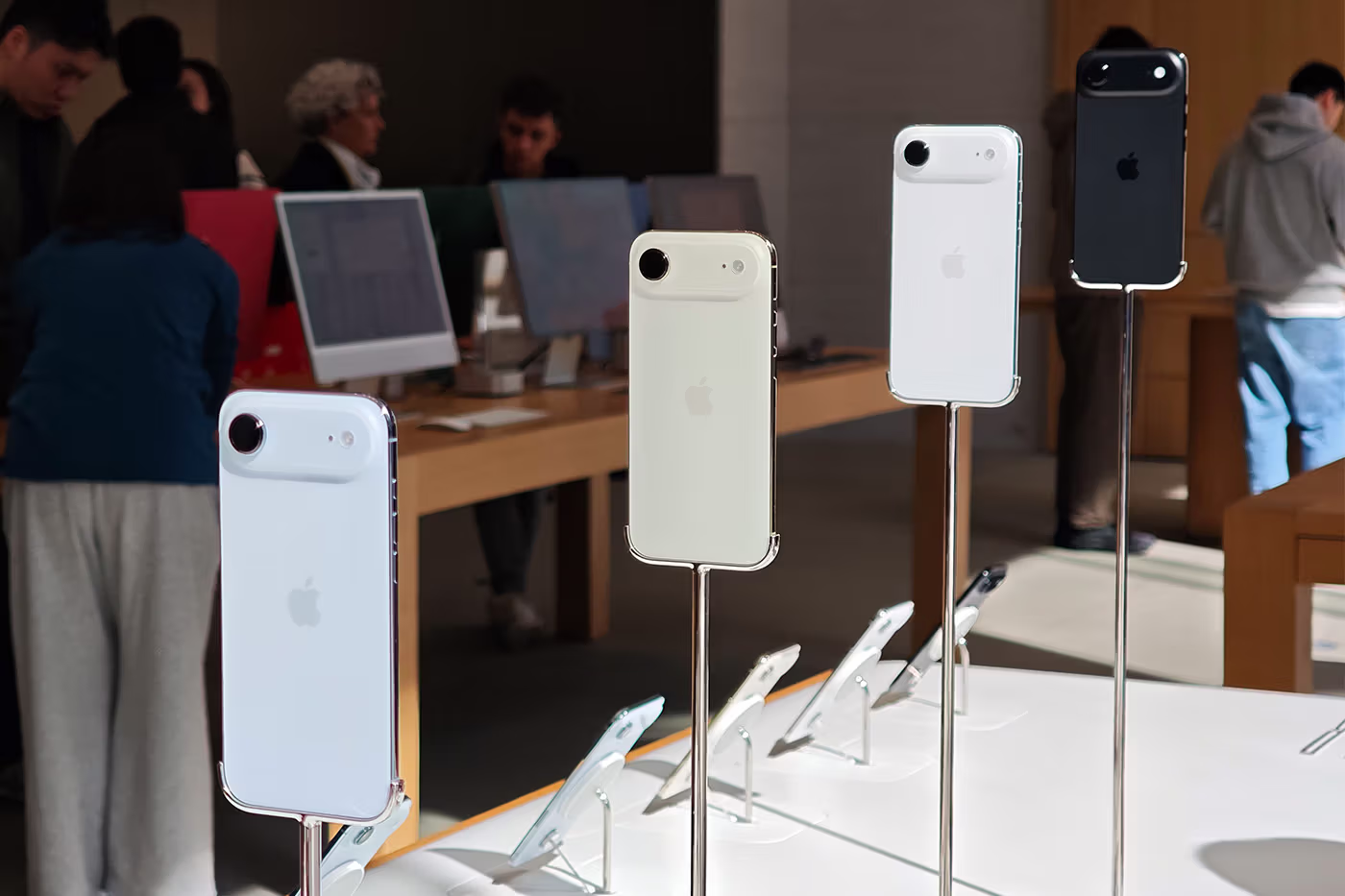
Apple’s ultra-slim experiment may be getting a second—and far more strategic—chance. New supply-chain reports suggest the iPhone Air 2 is being positioned as a redemption arc for the original Air, addressing its most criticized compromises while preserving the minimalist design language that made it stand out. If the rumors hold, Apple’s next Air model could arrive not as a novelty, but as a meaningful flagship aligned with the iPhone’s 20th anniversary.
The first iPhone Air drew attention for its razor-thin profile, but reception cooled quickly. Users praised the aesthetics yet balked at a single rear camera and lingering concerns over battery life—pain points that made the device feel more like a design statement than a practical daily driver. Apple, according to multiple industry reports, appears determined not to repeat that mistake.
At the heart of the rumored overhaul is a new display technology from Samsung Display known as Color Filter on Encapsulation, or CoE. Unlike traditional OLED panels that rely on a polarizer layer—which adds thickness and reduces brightness—CoE integrates the color filter directly into the encapsulation layer. The result is a display stack that is both thinner and significantly more efficient.
Samsung claims CoE OLED panels can be up to 20 percent thinner and as much as 1.5 times brighter at the same power consumption. For Apple, that efficiency gain is critical. A slimmer display frees up internal volume, which can be redistributed to solve the Air’s biggest shortcomings—namely battery capacity and camera hardware—without increasing the phone’s overall thickness.
That reclaimed space is rumored to enable two long-requested upgrades. First is a larger battery, which would help quiet fears that ultra-thin automatically means short battery life. Second is the addition of a dual-camera system, likely including an ultra-wide lens, bringing the Air line closer to parity with Apple’s mainstream models. Together, these changes would transform the Air from a visual flex into a genuinely capable smartphone.
The display strategy also hints at Apple’s broader roadmap. Multiple reports indicate that CoE OLED will debut first on the long-rumored iPhone Fold, expected as early as late 2026. The Air 2 would then inherit the technology once production scales and yields improve. This staggered rollout mirrors Apple’s historical pattern of introducing new display tech on premium or experimental devices before expanding it to more conventional form factors.
Timing matters here. With the iPhone approaching its 20th anniversary, Apple is widely expected to mark the milestone with hardware that feels symbolic rather than incremental. An iPhone Air 2 that successfully balances extreme thinness with real-world usability would fit that narrative perfectly—an evolution of form that no longer demands major sacrifice.
There’s also an industry-wide context at play. Smartphone makers are once again obsessed with thinness, but the market has made it clear that aesthetics alone are not enough. Consumers want lighter, slimmer devices, but not at the expense of battery endurance, camera versatility, or display quality. By leaning on CoE OLED, Apple could reframe ultra-thin design as an engineering achievement rather than a compromise.
Of course, all of this remains speculative. Apple has not confirmed the iPhone Air 2, its launch window, or its specifications. Current reports point to a possible 2027 release, aligning with Apple’s longer-term display transition plans. Still, the consistency of the leaks—from Korean supply-chain sources to well-established Apple analysts—suggests there is real momentum behind the concept.
If Apple executes correctly, the iPhone Air 2 could quietly shift the conversation around slim smartphones. Instead of asking what users must give up to get a thinner phone, the question may become how much more Apple can deliver by rethinking what happens beneath the glass.
For a product line once criticized as thin for thin’s sake, that would be a significant—and very Apple—reversal.
