

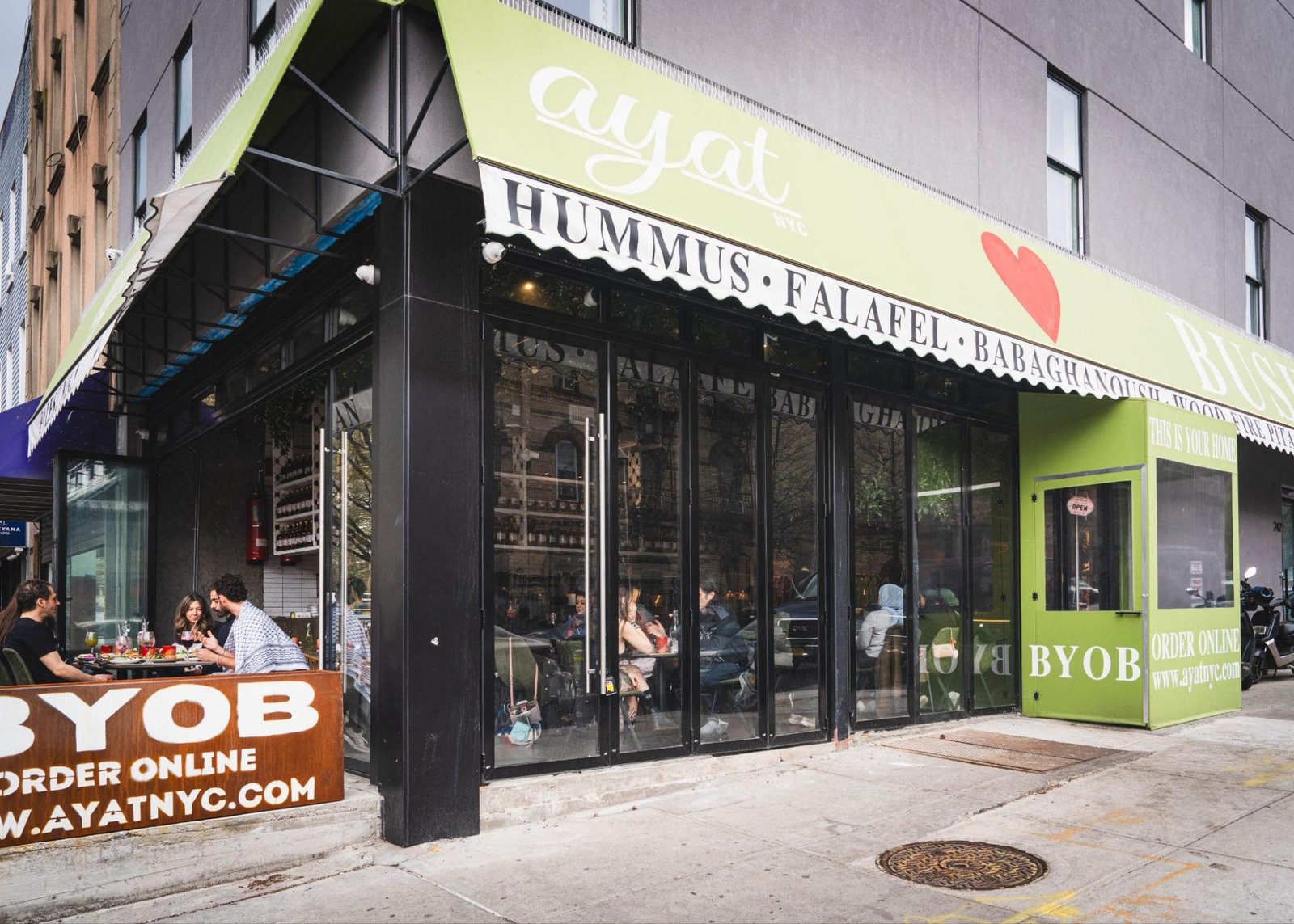
On a recent evening in Bushwick, the dining room at Ayat hummed with conversation. Families leaned over platters of musakhan and maqluba, a mural of Palestine stretched across one wall, and servers moved briskly between tightly packed tables. It looked like any thriving New York restaurant, except Ayat has never been just about food.
In a city where “Middle Eastern” often functions as a culinary catchall, Ayat was the first restaurant in New York to label itself explicitly and unapologetically as Palestinian. That choice has brought both fierce loyalty and sharp backlash.
“Ayat was named after my wife, who is Palestinian,” Abdul Elenani, CEO and Founder, told HuffMag. “Being unapologetically Palestinian is central to who we are.”
That clarity of identity, he says, is rooted in family. But the family at Ayat extends beyond bloodlines. It informs how guests are welcomed, how dishes are prepared, and how the restaurant positions itself publicly. Palestinian hospitality, generous, abundant, communal, is the blueprint. Large platters are designed for sharing. Staff are trained to treat regulars like relatives.
Yet the warmth of the dining room exists alongside a more complicated reality outside it.
Before Ayat opened, Palestinian cuisine was often subsumed under broader regional labels. Food historians note that dishes like musakhan, knafeh, and Maklouba are frequently described simply as “Middle Eastern” or “Levantine,” erasing national distinctions in the process.
By naming the restaurant Ayat and branding it as Palestinian, Abdul Elenani made a deliberate intervention in that pattern.
“I saw a gap and wanted to put Palestinian cuisine and culture on the map with clarity and pride,” he said.
That decision resonated with many diners, particularly Arab and Muslim New Yorkers who say they rarely see Palestinian identity centered so visibly in mainstream dining spaces. The restaurant quickly expanded beyond its original Brooklyn location.
But visibility has come at a cost.
Since its opening and especially following the events of October 7th and the genocide in Gaza, Ayat has faced waves of negative online reviews and social media criticism. Reviews focused not on the food, but on the restaurant’s identity and public stances.
“It was painful,” Abdul Elenani said. “So much heart and intention went into creating something meaningful and authentic.”
HuffMag reviewed public rating platforms and found noticeable spikes in one-star reviews during periods of heightened political tension. Several reviews referenced geopolitics rather than dining experiences. At the same time, the restaurant saw surges of supportive posts and organized patronage from customers who viewed eating at Ayat as an act of solidarity.
The polarization reflects a broader national trend: businesses connected to visible political or cultural identities increasingly find themselves drawn into public debates, whether they seek them or not.
Ayat’s involvement in community initiatives has further defined its public profile. The restaurant has hosted interfaith dinners, offered free holiday meals during Ramadan and Thanksgiving, and donated substantial amounts of food, including over $100,000 worth to Zohran Mamdani’s campaign and to student campuses, according to the founder.
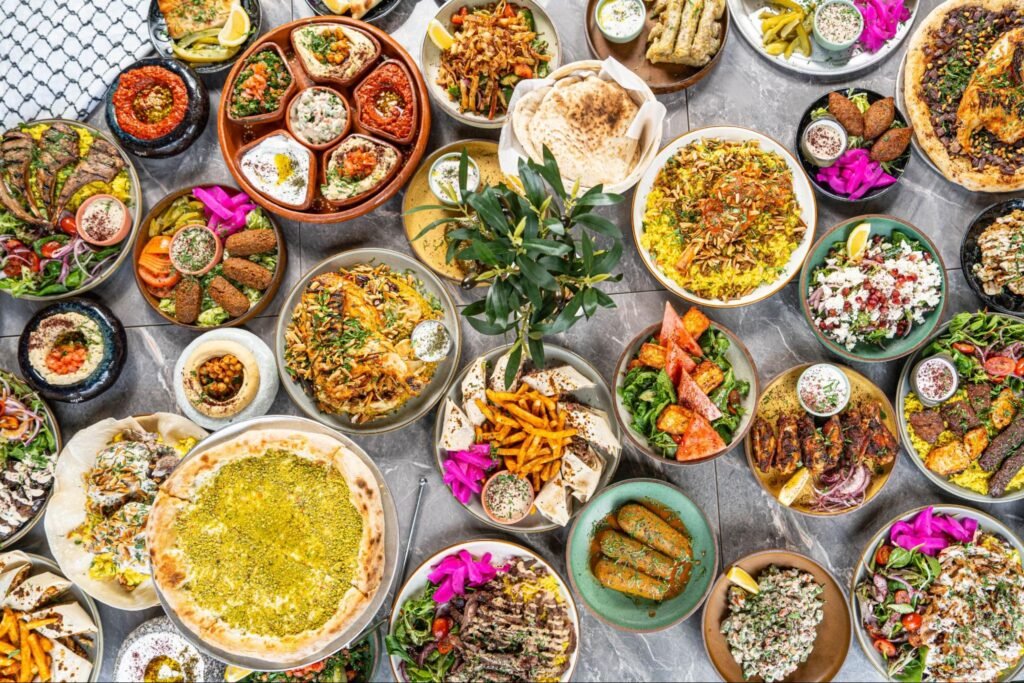
In an industry driven by reinvention, Ayat has resisted reinterpretation. The menu relies on traditional recipes passed down through generations.
Food critics who have visited note that the strength of Ayat’s cooking lies in its adherence to homestyle preparation, sumac-heavy musakhan layered over taboon bread, slow-cooked stews, syrup-soaked knafeh served warm and made to order.
“They represent resilience and history on a plate,” Abdul said. “They tell the story of Palestinians through food.”
That refusal to dilute or repackage the cuisine may be part of why Ayat has endured beyond novelty. In a saturated market, clarity can be an advantage.
Ayat’s story unfolds against a backdrop of deepening political fracture. Openly identifying as Palestinian intensified scrutiny, Abdul acknowledged. But he insists retreat was never an option.
“People are craving authenticity, humanity, and community,” he said. “Staying true to who we are became our strength.”
Yet on a busy night, those tensions are not immediately visible. What is visible are families passing bread, strangers sharing tables, and a staff intent on recreating the feeling of home.
Ayat’s rise underscores a larger shift in American dining culture: restaurants are no longer neutral spaces detached from identity. They are stages where culture, politics, memory, and migration converge.
Whether diners arrive for the maqluba, the mission, or both, Ayat has made one thing clear: for this restaurant, food is inseparable from the story and the story is unapologetically Palestinian.
