

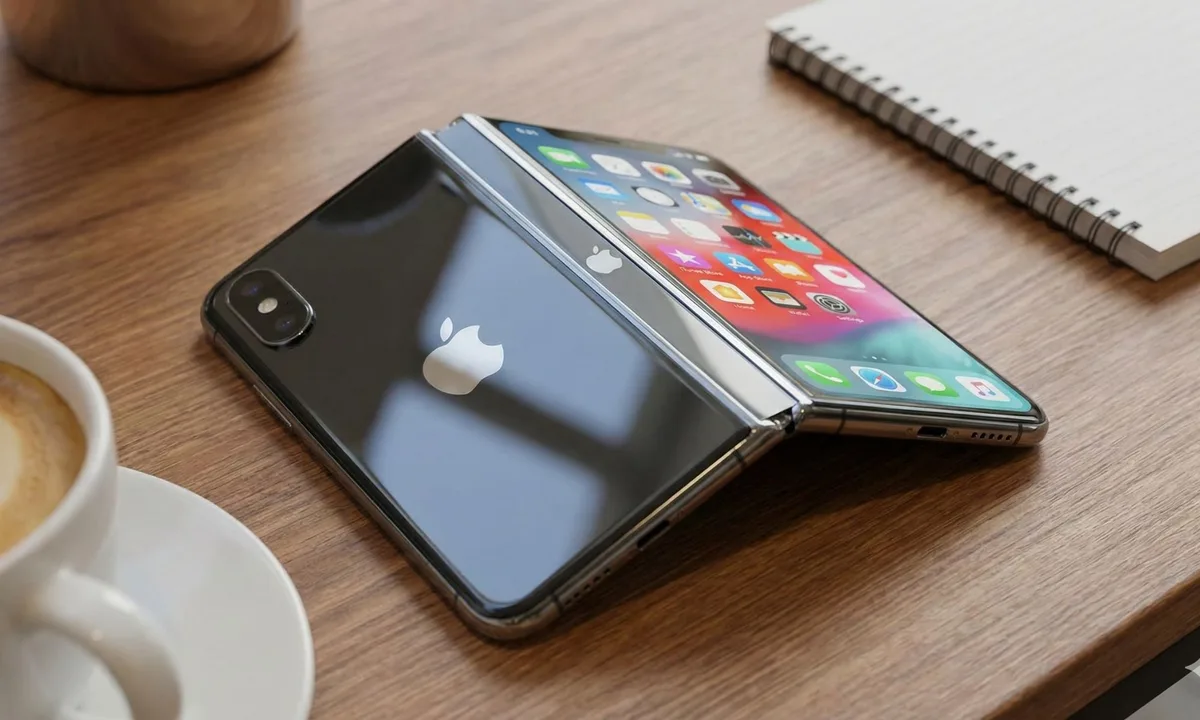
Apple may finally be preparing to enter the foldable smartphone arena. According to multiple industry reports, the company is actively developing its first foldable iPhone, with a projected release window set for late 2026 or early 2027.
If accurate, the move would mark one of Apple’s most significant hardware shifts since the introduction of the original iPhone—positioning the brand directly against foldable offerings from Samsung, Google and other major players.
A Book-Style Design
Current leaks suggest Apple’s first foldable will adopt a book-style form factor, opening horizontally like a compact tablet rather than flipping vertically. When unfolded, the inner display is rumored to measure approximately 7.8 inches, while the exterior screen could sit around 5.5 inches for everyday use when closed.
The approach mirrors existing large-format foldables but is expected to carry Apple’s signature focus on structural refinement and display precision.
Premium Materials and Engineering
Durability appears to be central to the design. Reports indicate the device may feature a titanium alloy casing, paired with a hinge mechanism constructed from stainless steel and titanium. This hybrid structure would aim to address one of the foldable category’s most persistent concerns: long-term hinge reliability.
Analysts also suggest Apple could eliminate Face ID in favor of a Touch ID side button, a move that would conserve internal space and simplify hardware integration within the foldable chassis.
Expected Specifications
While Apple has not confirmed details, supply chain insights point toward:
- A dual-lens rear camera system
- Front-facing cameras usable in both folded and unfolded modes
- A high-density battery optimized for dual-display power demands
Given the complexity of flexible display panels and reinforced hinge systems, pricing is expected to reflect the engineering investment.
A Premium Price Tag
Industry analysts predict a starting price between $2,000 and $2,500 USD, placing the device firmly in ultra-premium territory. That positioning suggests Apple is targeting early adopters and power users rather than mainstream buyers—at least in its first generation.
Strategic Timing
Apple has historically entered product categories later than competitors, prioritizing refinement over speed. If the foldable iPhone arrives in 2026, it would likely signal that the company believes the technology—and consumer demand—has matured enough to support a durable, high-performance device.
Until official confirmation arrives, the foldable iPhone remains speculative. But if the reports hold true, Apple’s entry into the foldable market could redefine expectations for design, durability, and price in the next era of smartphones.
