

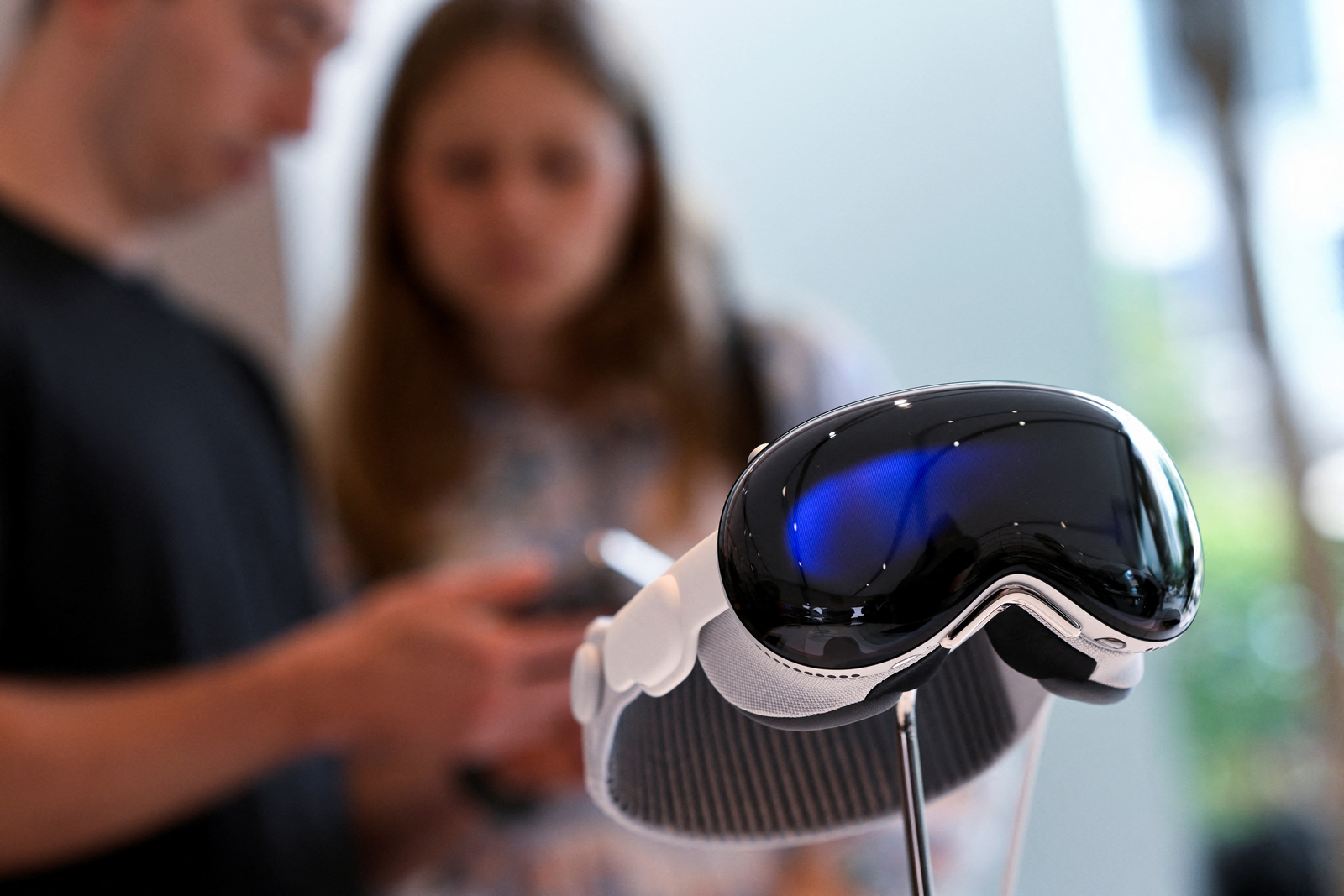
Apple’s ambitious push into spatial computing is running into turbulence. According to multiple industry reports, the Apple Vision Pro has seen significant production slowdowns and sharply reduced marketing spend as demand for the $3,499 USD mixed-reality headset fails to meet early expectations.
Manufacturing partner Luxshare reportedly halted Vision Pro production in early 2025, signaling a major recalibration of Apple’s plans. Market estimates suggest only around 45,000 units shipped during the 2025 holiday quarter—down dramatically from the roughly 390,000 units moved during its 2024 launch year.
A Premium Product, Stuck in Early-Adopter Mode
Positioned as a “spatial computer” rather than a traditional VR headset, Vision Pro launched with heavy hype and limited availability, officially rolling out in just 13 countries. But the combination of its steep price tag, front-heavy design, limited battery life, and a relatively thin native app ecosystem kept the device squarely in early-adopter territory.
Marketing data underscores the shift in strategy. Sensor Tower figures indicate Apple slashed its digital advertising spend for Vision Pro by more than 95 percent across major markets like the U.S. and U.K. throughout 2025—a stark contrast to the aggressive promotion seen during its debut year.
A Cooling Market Adds Pressure
Apple’s pullback comes amid broader softness in the headset category. Meta’s Quest lineup—priced far below Vision Pro—now commands roughly 80 percent of the global VR market, while the overall headset sector reportedly declined 14 percent year-on-year. In that environment, convincing developers and consumers to invest in an ultra-premium platform has proven challenging.
Analysts point to a familiar platform dilemma: without a large installed user base, developers hesitate to build, and without compelling apps, mainstream users stay away.
Not the Endgame—Just the First Chapter
Despite the slowdown, Vision Pro may not be the failure some headlines suggest. Apple has consistently framed the device as a long-term bet rather than an instant mass-market hit. Industry chatter now points to a pivot toward more accessible Vision hardware, alongside deeper investment in AI-powered smart glasses.
In that light, Vision Pro increasingly looks like a high-end development kit—a first step toward whatever ultimately defines Apple’s future in face-worn computing. The current production cuts may signal not a retreat, but a reset, as Apple recalibrates its timeline for making spatial computing mainstream.
