

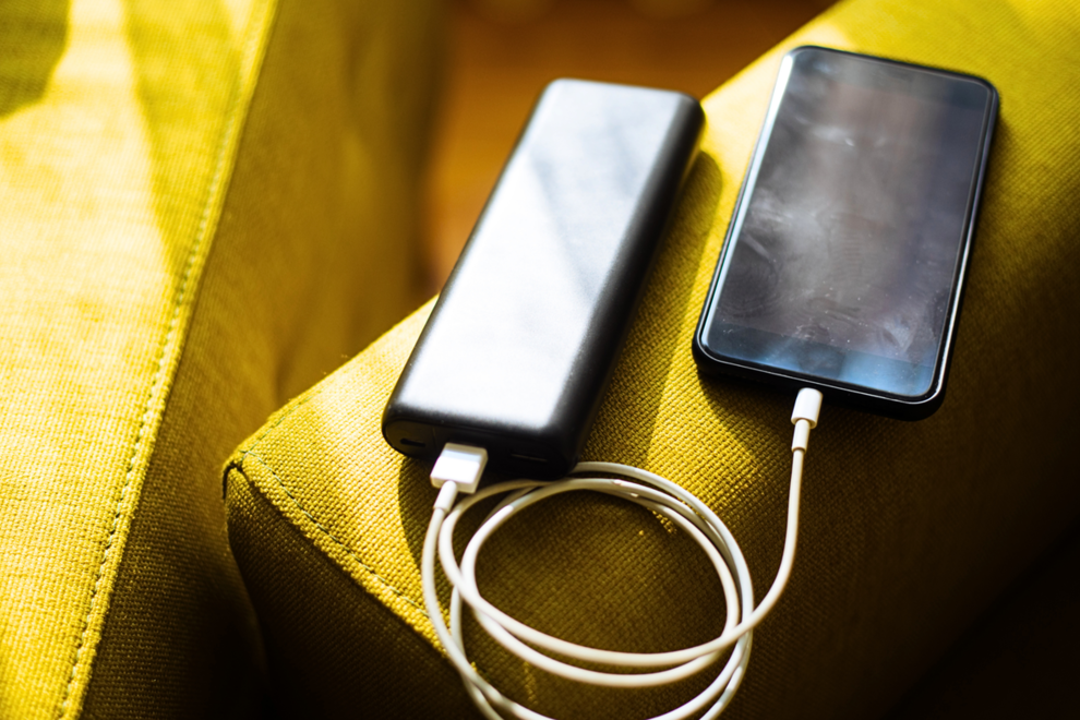
Traveling with electronics sounds simple until airport security stops you over a battery. A power bank can be one of the most useful items in a travel bag, especially when your phone is running low during a long flight or a busy travel day. But lithium-ion batteries come with specific airline safety rules, and those rules can vary by airline and country.
So, if your favorite power bank was taken at the airport—or you simply want to avoid the hassle—there are other charging options worth considering.
The good news is that you do not have to travel without a way to keep your devices powered. The key is choosing the right charger and understanding what you can legally and safely bring on a plane.
Why Are Power Banks Restricted on Flights?
Power banks contain lithium-ion batteries. These batteries can overheat or experience a dangerous reaction called thermal runaway if they are damaged, overheated, defective, or short-circuited.
According to the Federal Aviation Administration (FAA), spare lithium-ion batteries and power banks must be carried in your carry-on baggage, not in checked luggage. Power banks with a capacity of up to 100 watt-hours (Wh) are generally allowed under U.S. federal rules, while larger batteries from 101 to 160 Wh require airline approval. Batteries above 160 Wh are not permitted on passenger aircraft.
Airlines can also impose stricter limits, so checking your airline’s current policy before traveling is always a smart move.
1. Pack a Compact USB-C Wall Charger
A small USB-C wall charger is one of the easiest alternatives to a power bank.
Instead of carrying a battery that stores electricity, a wall charger simply connects your phone, tablet, earbuds, or other compatible device to an electrical outlet.
Look for a compact charger with:
- USB-C Power Delivery (PD)
- At least 20W for most smartphones
- Multiple ports if you travel with several devices
- A compact design that fits easily in a personal item
A 30W or 45W charger can be particularly useful if you want one charger for both your phone and a small tablet or laptop.
2. Choose a Multi-Port Travel Charger
If you normally carry several chargers, a multi-port charger can reduce the number of items in your bag.
For example, one charger with two USB-C ports and one USB-A port could potentially handle your phone, smartwatch, headphones, and other accessories.
This is especially useful for couples or families traveling together.
Instead of bringing several individual charging bricks, one multi-port charger can become the central charging station in a hotel room.
3. Use a USB-C Laptop Charger
If you travel with a USB-C laptop, its charger may already be powerful enough to charge several of your smaller devices.
Modern USB-C chargers can often provide enough power for phones, tablets, headphones, and other compatible electronics.
The advantage is simple: one charger, fewer cables, less luggage.
Before relying on a laptop charger, check that its power output is compatible with your other devices.
4. Carry the Right Charging Cables
A charger is only useful if you have the correct cable.
For many travelers, a small cable kit can replace the need to carry multiple bulky charging accessories.
Consider packing:
- USB-C to USB-C cable
- USB-C to Lightning cable for compatible older Apple devices
- Short charging cable for earbuds
- One spare cable for emergencies
Short cables are particularly convenient because they take up less space and are easier to organize.
5. Use Airport Charging Stations Carefully
Airports often have charging stations, USB ports, and power outlets.
They can be helpful when your phone battery is low, but travelers should be careful when connecting devices to unfamiliar USB ports.
A wall outlet with your own charger can be a simpler option. It also gives you more control over the charging equipment you are using.
A small wall charger can therefore be more useful than relying completely on airport USB ports.
6. Consider a Charging Hub for Longer Trips
For hotel stays, a compact charging hub can make your setup much easier.
Instead of plugging several chargers into different outlets, you can use one charging station designed for multiple devices.
This is particularly useful if you travel with:
- Smartphone
- Smartwatch
- Wireless earbuds
- Tablet
- Camera
- Laptop
The best travel charging setup is usually the one that reduces clutter while still giving you enough power for your devices.
What About Bringing a Power Bank Anyway?
You do not necessarily have to give up power banks completely.
In the United States, FAA guidance says spare lithium-ion batteries and power banks must remain in your carry-on baggage and cannot be placed in checked baggage. Batteries should also be protected from damage and short circuits.
If your carry-on is taken at the gate and placed in the aircraft’s cargo hold, the FAA says you should remove spare lithium batteries and power banks and keep them with you in the cabin.
Also, never travel with a damaged, swollen, defective, or recalled lithium battery. Such batteries can present a serious fire risk.
The Best Travel Charging Setup
For many travelers, a simple setup is enough:
One compact USB-C wall charger + two good cables + one multi-port charger when needed.
This combination can keep most everyday devices running without relying entirely on a large portable battery.
If you do carry a power bank, check its watt-hour rating and your airline’s rules before leaving home.
Final Takeaway
Losing a favorite power bank at airport security can be frustrating, but it does not mean you have to travel without reliable charging.
A compact USB-C wall charger, multi-port charger, laptop charger, and a small cable kit can cover most everyday travel needs. And if you choose to bring a power bank, remember that spare lithium batteries and power banks generally need to stay in your carry-on rather than checked baggage under U.S. aviation rules.
The simplest travel rule is this: check your airline’s current battery policy before your trip, keep lithium batteries accessible in the cabin, and never pack a damaged battery.
