

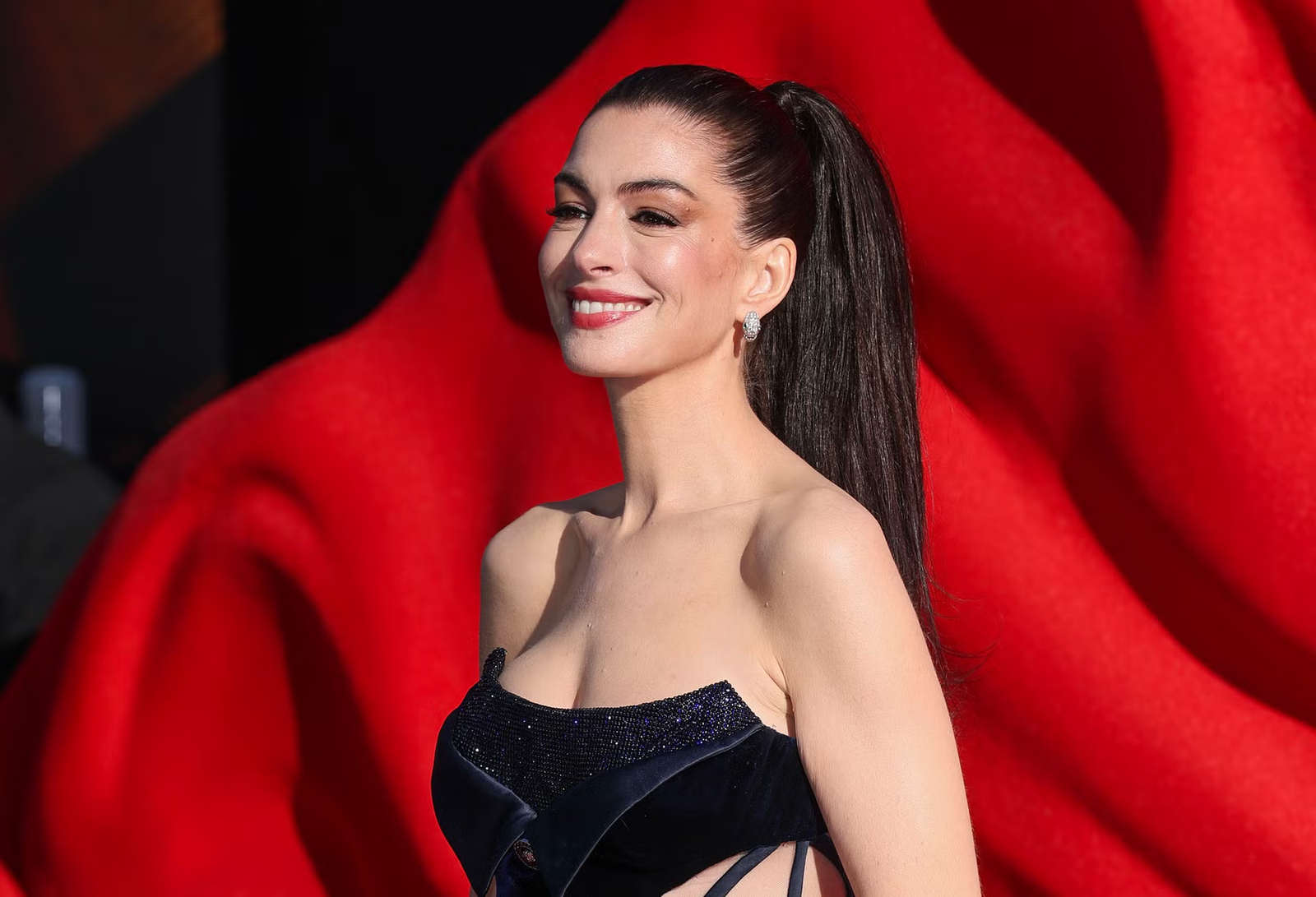
At the London premiere of The Devil Wears Prada 2, Anne Hathaway delivered a look that blurred the boundaries between classic tailoring and eveningwear. Rather than opting for a conventional gown, she chose a piece that dissected and reassembled formal dressing codes with precision.
A Tuxedo, Reimagined
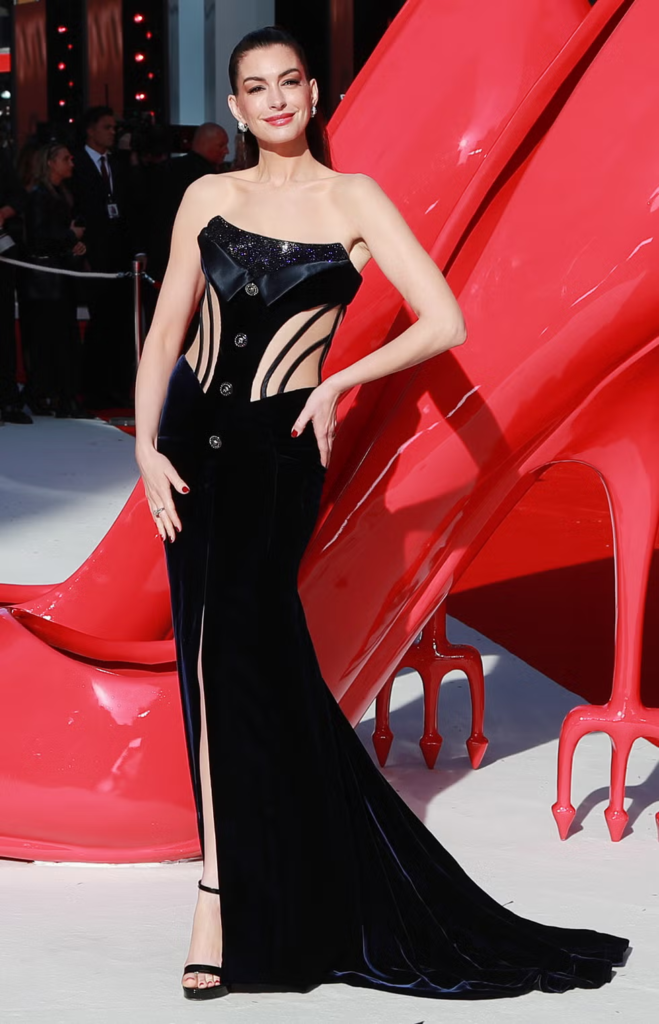
Hathaway’s custom design from Atelier Versace was built around the structure of a tuxedo—but reinterpreted through a distinctly modern, feminine lens. The navy velvet gown featured a sharply defined bodice resembling a tailored jacket, complete with lapel-like detailing and a line of buttons that reinforced its suiting inspiration.
What set the look apart, however, was its intentional deconstruction. Sheer side panels revealed the internal architecture of the garment, exposing boning and construction elements typically hidden beneath the surface. The effect was both technical and aesthetic—turning the dress into a study of how clothing is made.
Movement and Contrast
The lower half of the gown shifted the tone entirely. A high-slit skirt introduced fluidity and movement, contrasting with the structured upper portion. The extended train added drama without overwhelming the design, allowing the interplay between rigidity and softness to remain the focal point.
At the back, the tuxedo concept continued, with folded, lapel-like elements giving the illusion that the garment was coming undone. This subtle asymmetry reinforced the theme of controlled deconstruction.
Styling That Amplifies the Concept
Working with stylist Erin Walsh, Hathaway kept the accessories sharp and deliberate. Bulgari Serpenti earrings introduced a sculptural element, their coiled design echoing the architectural lines of the dress.
Her hair—styled into a sleek, high ponytail—ensured nothing distracted from the neckline and detailing. The overall approach prioritized clarity: every element supported the garment’s concept rather than competing with it.
A Designer Alongside the Muse
Adding another layer to the moment, Hathaway was joined on the red carpet by Donatella Versace herself. The designer, long associated with bold, body-conscious silhouettes, appeared in a black off-the-shoulder gown featuring layered ruching—an aesthetic counterpoint to Hathaway’s structured look.
Their appearance together underscored the collaborative nature of fashion at this level, where design and performance often intersect—especially in a film so deeply rooted in the industry.
Fashion Meets Narrative
Much like the original The Devil Wears Prada, the sequel continues to explore the mechanics and mythology of fashion. Hathaway’s look felt aligned with that theme—less about surface glamour and more about the systems, craftsmanship, and ideas behind what we wear.
The Takeaway
This wasn’t just a red-carpet gown—it was a conceptual piece. By merging tailoring with couture and exposing the process behind the polish, Hathaway’s look captured a broader shift in fashion: one that values construction as much as appearance.
In a setting where spectacle is expected, precision stood out.
