

Fujifilm is once again redefining what instant photography can be. With the debut of the instax mini Evo Cinema, the brand expands its Evo lineup into cinematic territory, merging still photography, short-form video, and tactile nostalgia into a single, pocket-sized device. Launching first in Japan on January 30, the camera marks a notable evolution for instax—one that looks backward to film history while pushing firmly into the digital future.
At its core, the instax mini Evo Cinema is a hybrid camera. In addition to capturing still images, it can record up to 15 seconds of video per clip. What makes that feature distinctive is how Fujifilm bridges physical and digital formats: each printed photo can include an automatically generated QR code that links directly to the corresponding video file. Scan the code, and the moment comes alive. It’s a clever solution that preserves the charm of instant prints while embracing modern sharing habits.
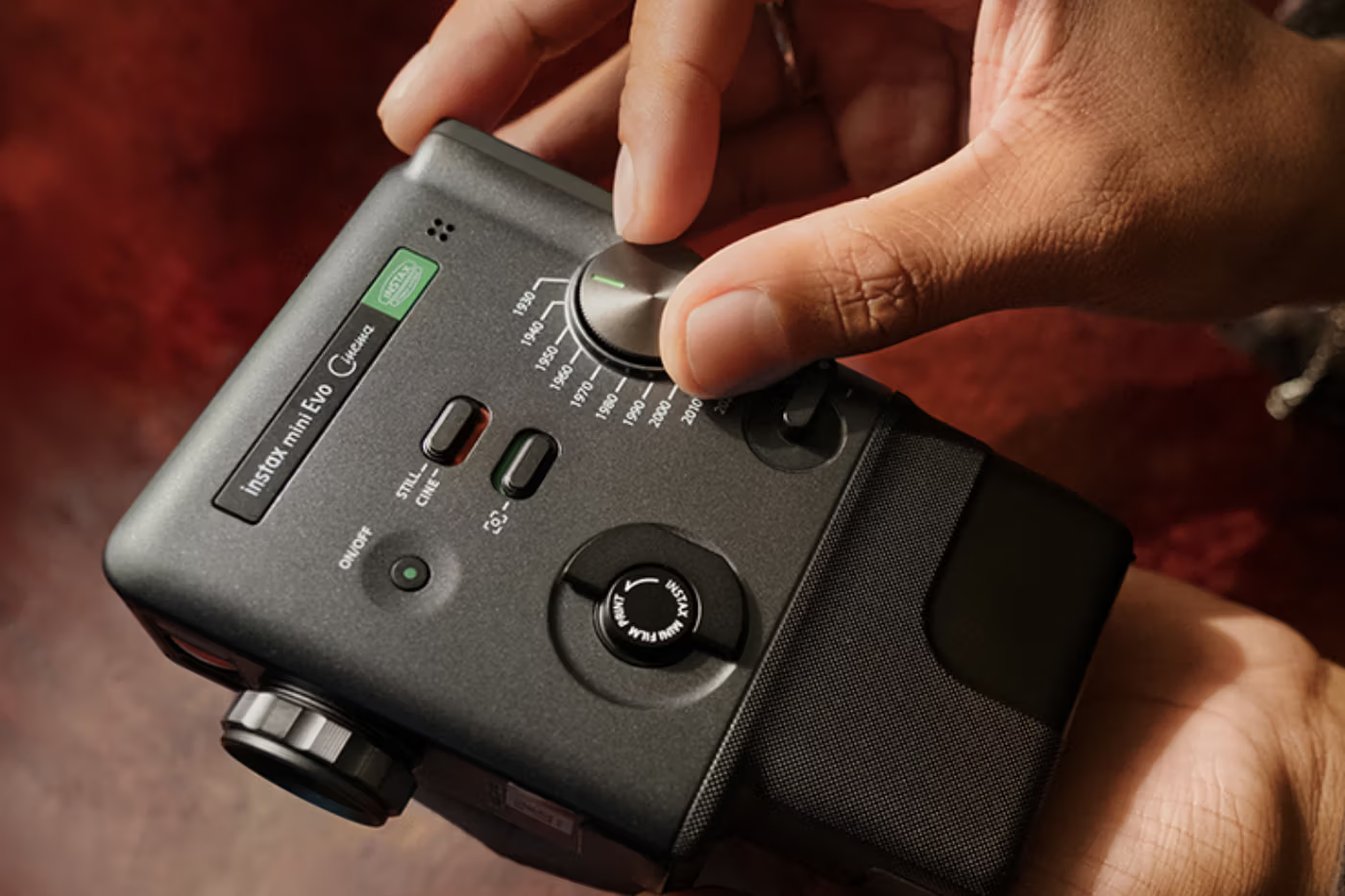
The camera’s most defining feature is the newly introduced “Eras Dial.” This physical control allows users to cycle through 10 different visual and audio profiles inspired by cinematic history. From the grainy, flickering look of 1960s 8mm film to the saturated tones and CRT-style textures associated with later decades, each era setting reshapes both image and sound. Subtle audio effects—such as the mechanical whirr of film reels—add an extra layer of immersion, transforming each capture into a miniature time capsule.
Customization goes well beyond surface-level filters. Each era effect includes 10 adjustable intensity levels, giving users a total of 100 creative combinations. The experience is intentionally tactile: rotating the dials produces a satisfying analog click, reinforcing Fujifilm’s commitment to physical interaction in an age dominated by touchscreens.
Visually, the instax mini Evo Cinema is steeped in heritage. Its black-and-gray body features a vertical grip design inspired by the FUJICA Single-8, a classic model introduced in the mid-1960s. The homage is more than aesthetic. A dedicated “Print Lever” mimics the motion of winding film, adding a mechanical ritual to the act of producing a photo. It’s a deliberate contrast to the frictionless nature of smartphone photography.
Despite its retro styling, the camera is thoroughly modern in functionality. Beyond shooting and printing independently, it also works as a smartphone printer, allowing users to select and output images directly from their mobile devices. Paired with a dedicated app, the mini Evo Cinema unlocks additional creative tools, including cinematic editing options and movie-style opening and closing title templates. The result is a three-in-one creative platform: camera, printer, and editing studio.
This blend of old and new speaks directly to Fujifilm’s broader strategy. Under the Fujifilm banner, instax has evolved from a novelty product into a cultural staple, embraced by both analog purists and Gen Z creators. The mini Evo Cinema feels like a natural extension of that trajectory—one that recognizes the emotional value of physical media while acknowledging the central role of video in contemporary storytelling.
Rather than chasing technical specs alone, Fujifilm is clearly prioritizing experience. The instax mini Evo Cinema isn’t about replacing professional cameras or smartphones; it’s about slowing the process down just enough to make creation feel intentional again. Every dial turn, lever pull, and printed frame reinforces the idea that how a moment is captured matters just as much as the moment itself.
With its cinematic effects, hybrid capabilities, and heritage-driven design, the instax mini Evo Cinema positions itself as more than a gadget—it’s a creative object. For users who crave nostalgia but live in a digital-first world, Fujifilm’s latest instax release offers a compelling middle ground: film-inspired storytelling, reimagined for the present.
